
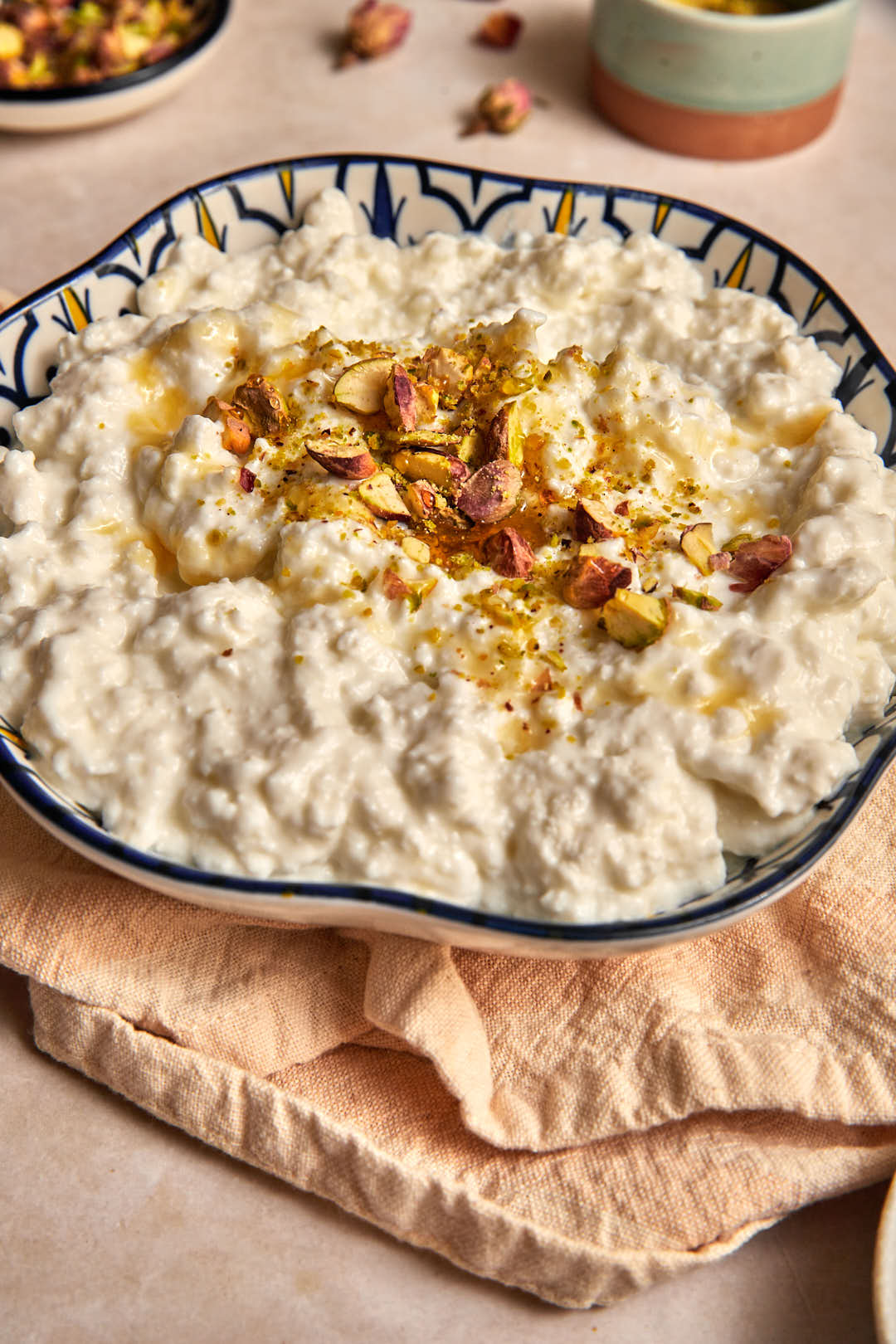
Ashta (or ishta or qashta) is a delicious Middle Eastern clotted cream, which is rich and delicate with a beautiful texture. It’s often associated with Lebanese desserts, but enjoyed all across the Levantine. It’s subtly floral with the addition of rose and orange blossom water perfect with a drizzle of honey or simple syrup, or layered in your favorite Middle Eastern desserts.
Ashta cream is one of the things I was most proud of learning how to make, because I love it so much but thought it would be way more difficult than it was to make!
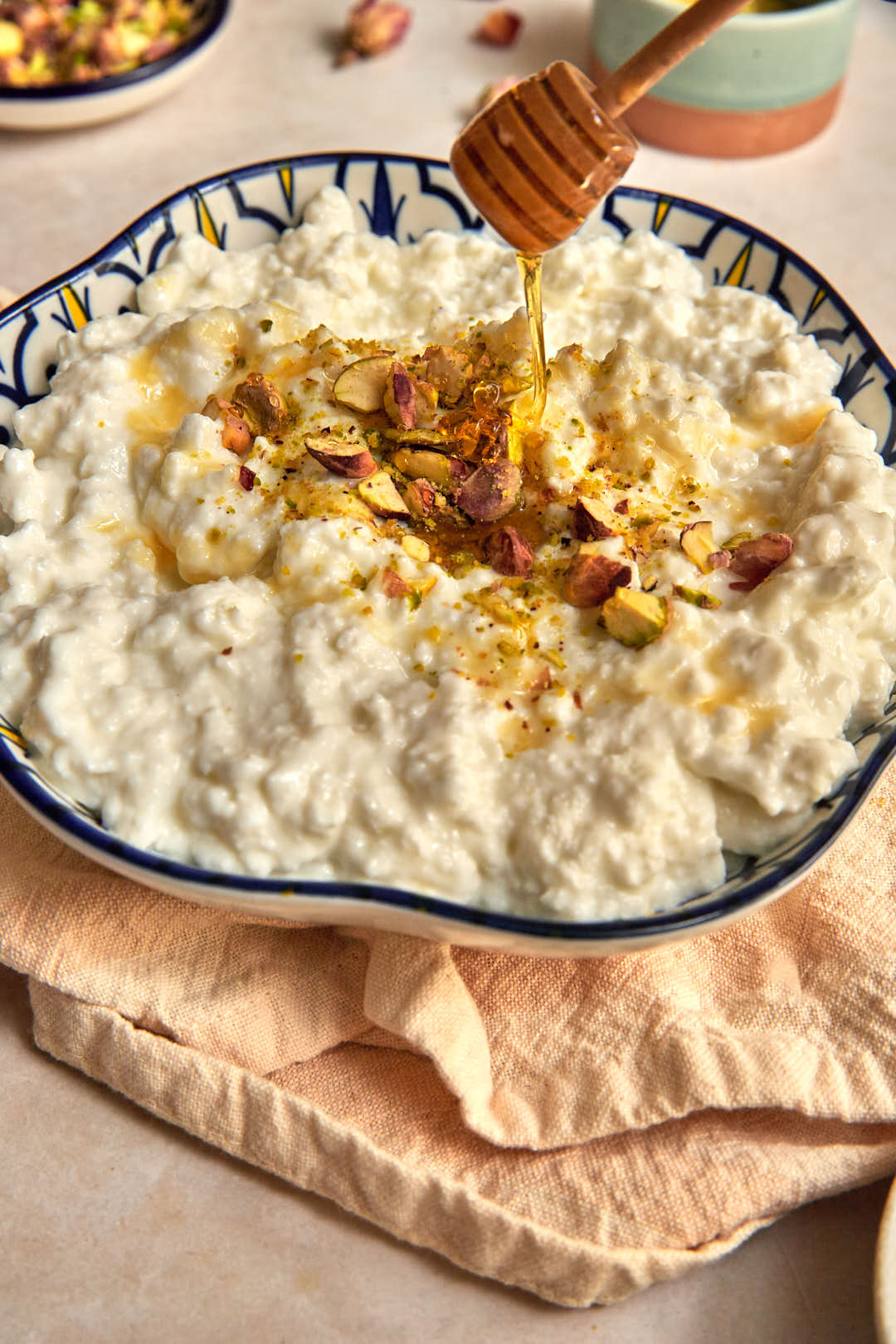
Ashta is also known as kashta, qashta, or ishta depending on what part of the Middle East you are in. Its roots are deeply embedded in countries like Lebanon, Palestine, Syria and Jordan. Traditionally, it’s made by skimming the cream that thickens on top of boiled milk, separating the curds from the milk and combining those curds with a quick stovetop cream to get a distinct texture
I would eat this any time, any day, but Arabic clotted cream truly shines during Ramadan and Eid gatherings- where we are most likely to enjoy our traditional Arabic desserts with friends and loved ones! It’s a key component in things like halawet el jibn, kunafa and qatayef.
For some inspiration on what desserts you can use this in, look through my Ramadan dessert collection. Qashta pairs so well with my easy rose water simple syrup.
Jump to:
Why you’ll love this recipe:
- If you love mascarpone or clotted cream, you’ll love this. It’s even tastier, with its creamy and rich texture and hints of rose and orange blossom water.
- Making easy ashta is so much more approachable than I thought it would be- it really comes together so easily, and with just 3 main ingredients.
- You can enjoy ashta cream on it’s own, with some jam, honey, or simple syrup, or in a really wide variety of desserts and Middle Eastern treats.
Ingredients you need:
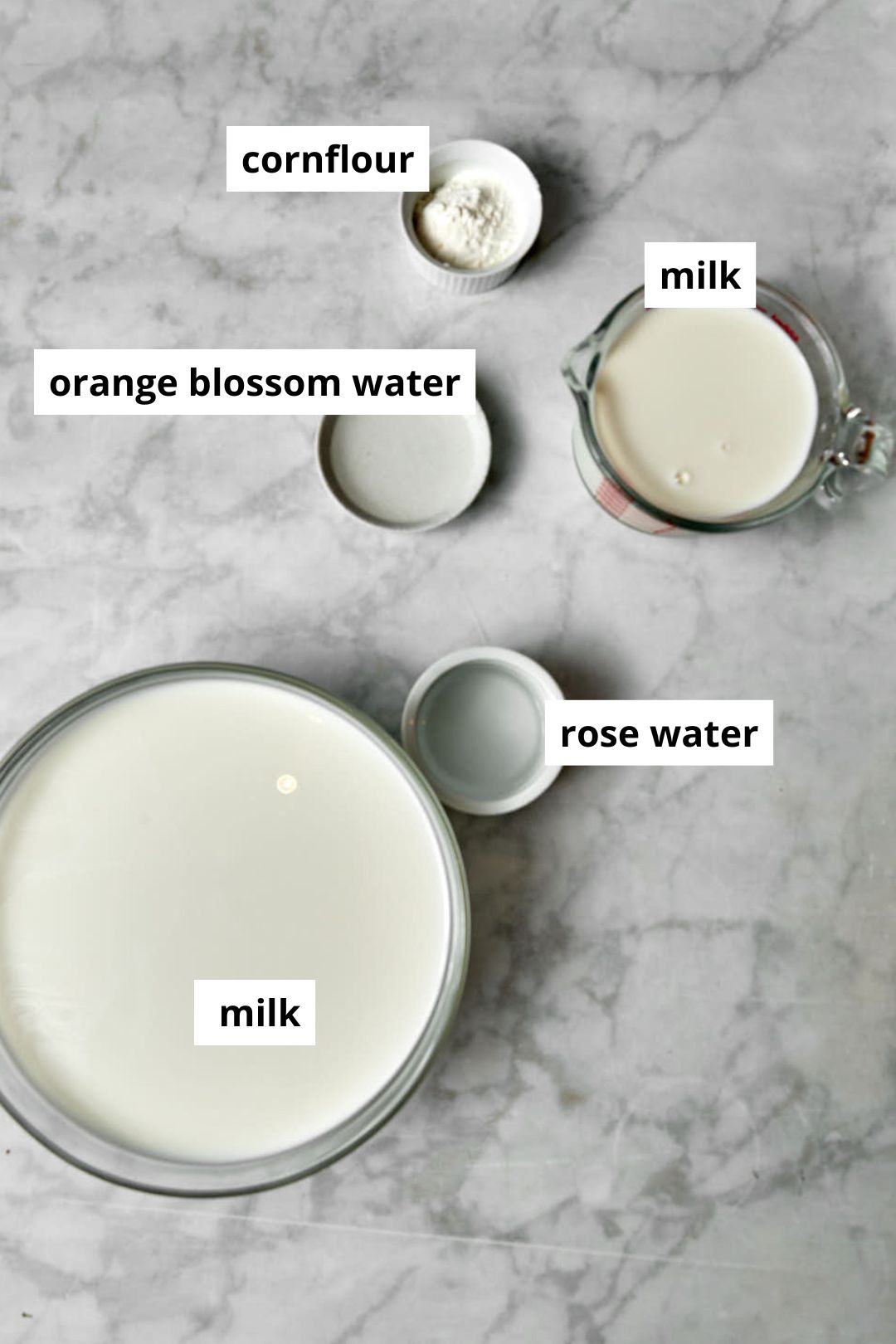
- Whole (full fat) milk: You’ll use milk in two places, first to get the milk curds, and second to make a simple cream. Don’t use low fat or skim milk!
- White vinegar: this helps the milk form curds faster, don’t worry you won’t taste it at all.
- Cornstarch: (cornflour) to thicken the stovetop cream
- Orange blossom water and rose water: you can find these in Middle Eastern supermarkets or online, I love the flavor it gives Middle Eastern desserts.
See recipe card for quantities.
How to make the easiest ashta (clotted cream):
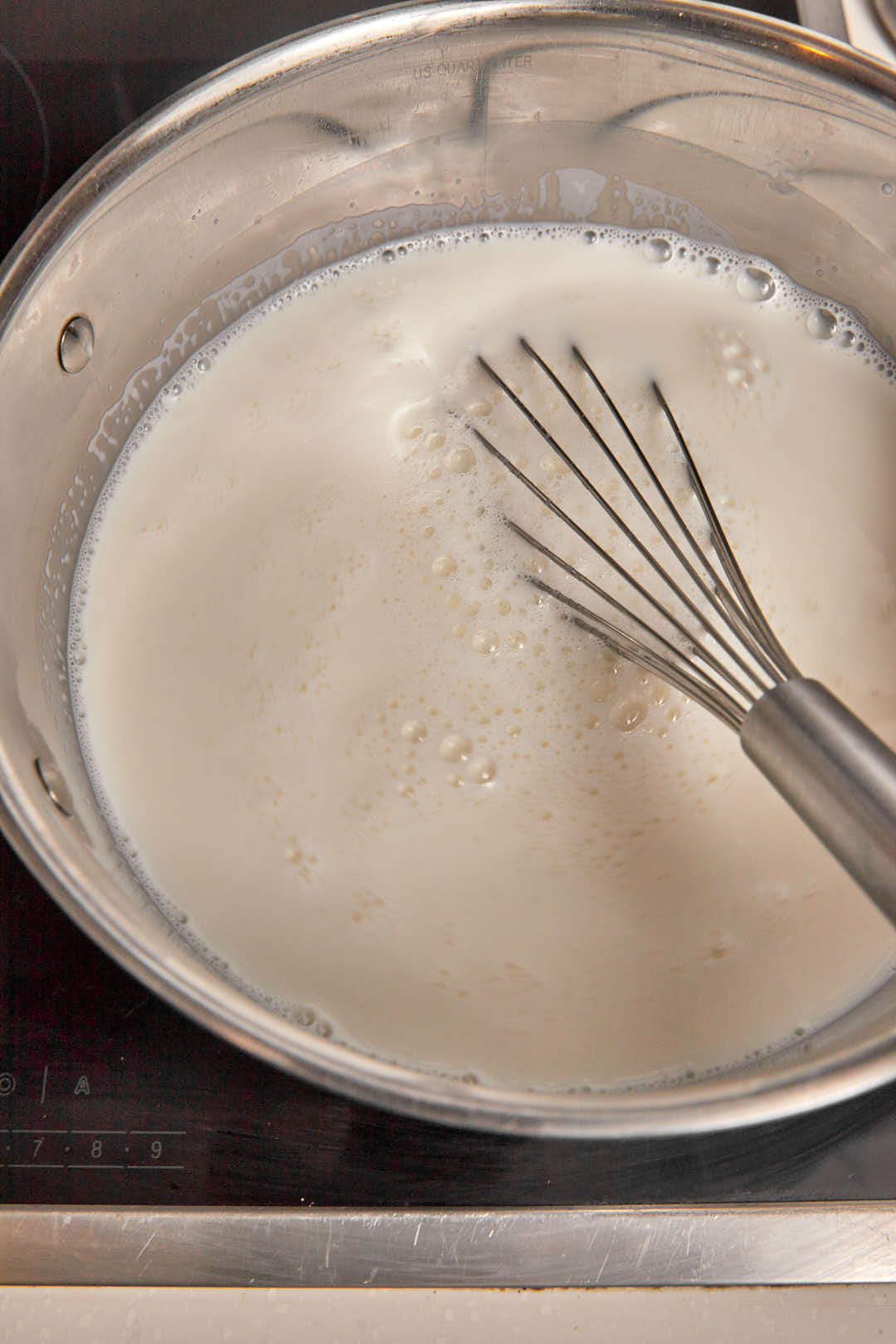
- Step 1: Add milk to a saucepan, and place on medium high heat.
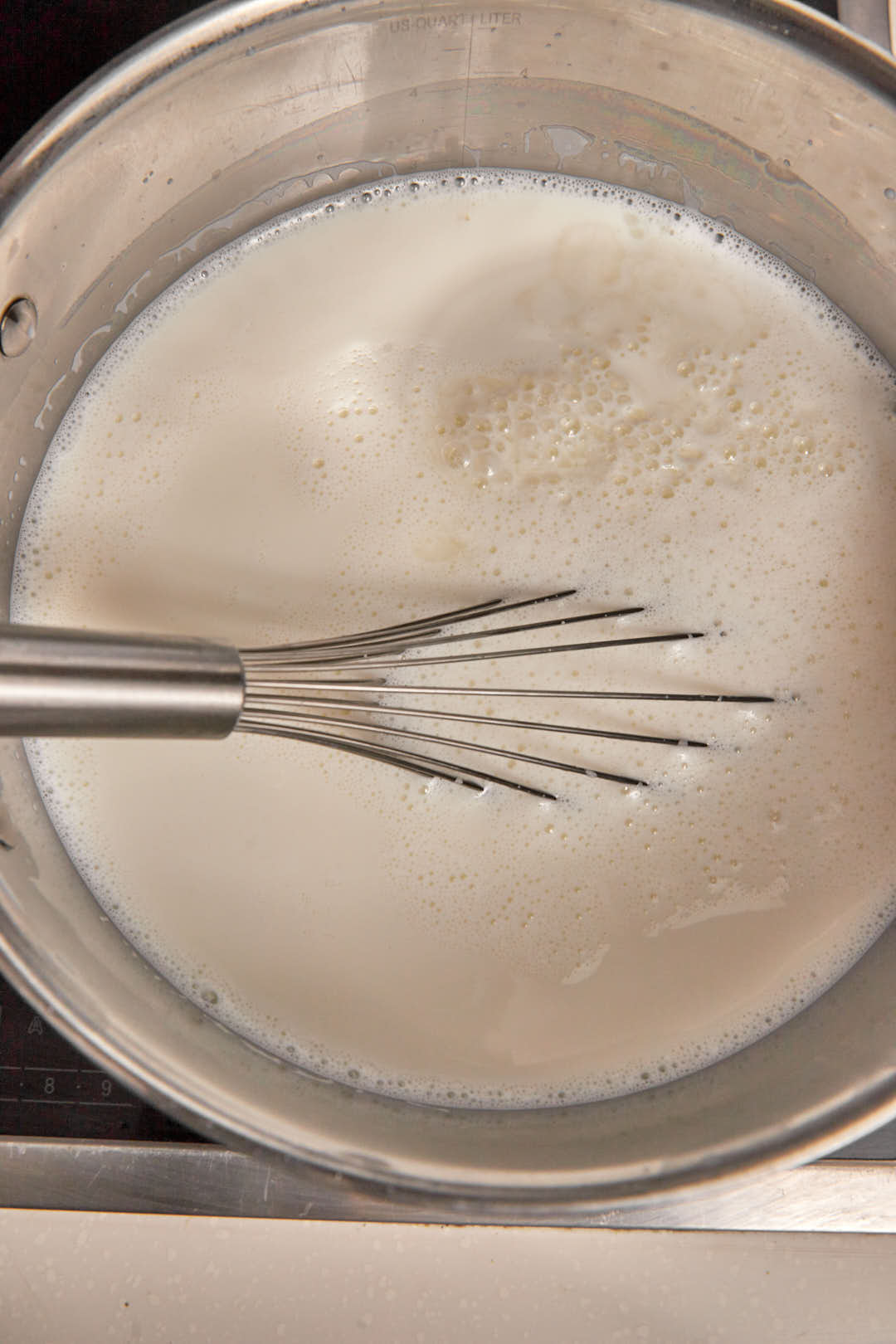
- Step 2: When milk starts simmering, but before it comes to a boil, add the white vinegar.
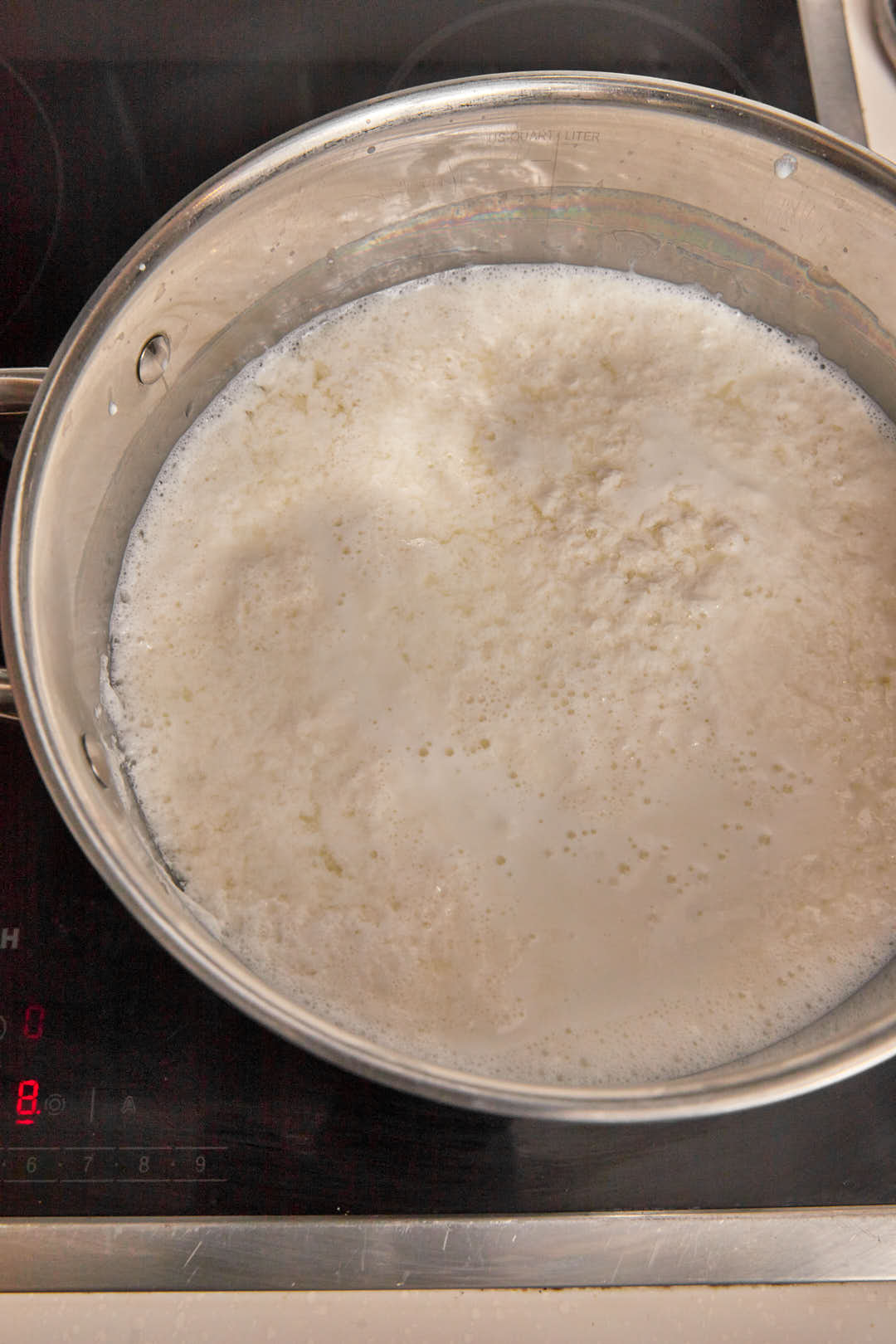
- Step 3: Let the milk mixture boil for 2 minutes, and you’ll see curds start to form on the surface.
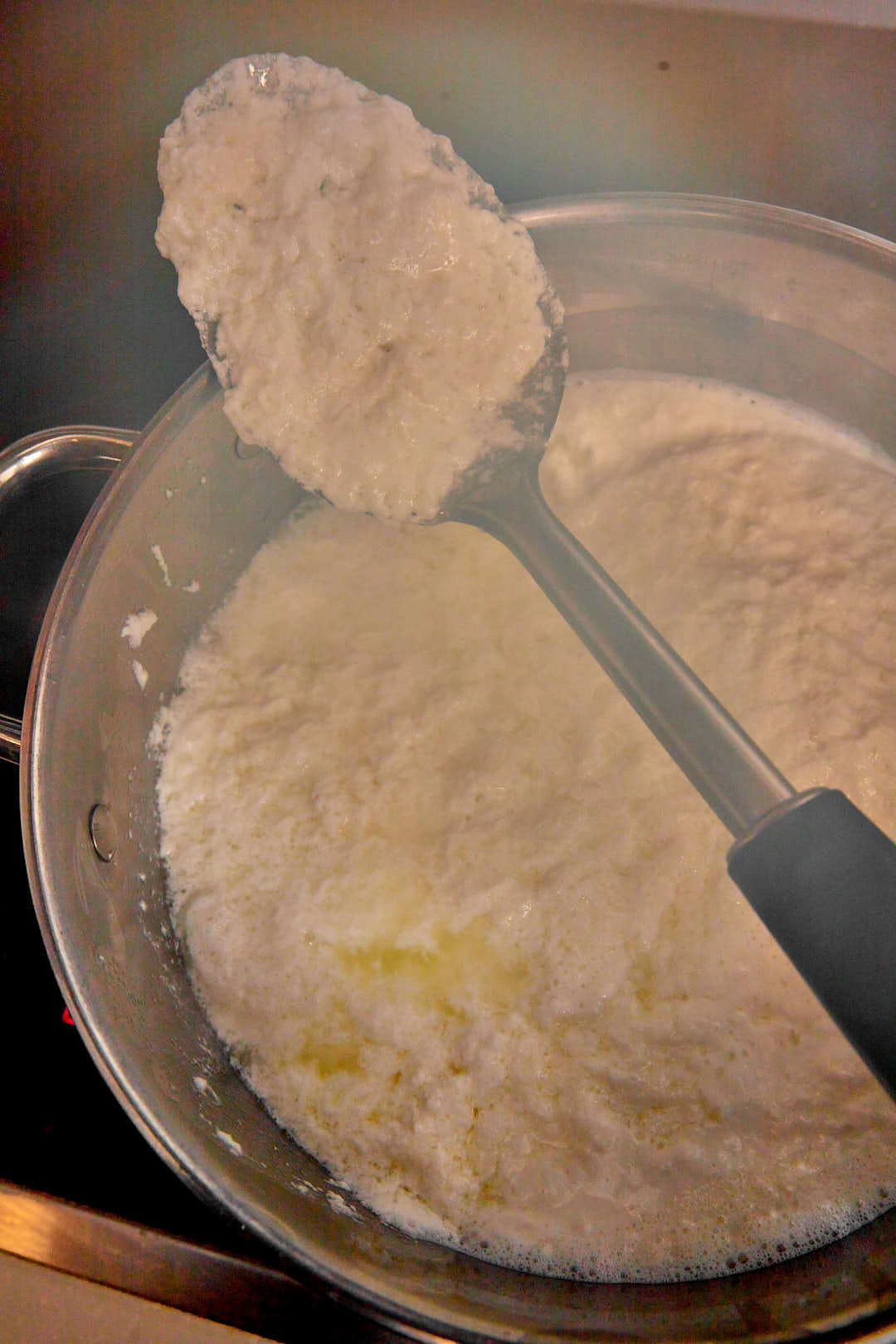
- Step 4: After 2 minutes, use a slotted spoon to remove the clotted cream curdles from the surface, and place them in a strainer set over a large bowl.
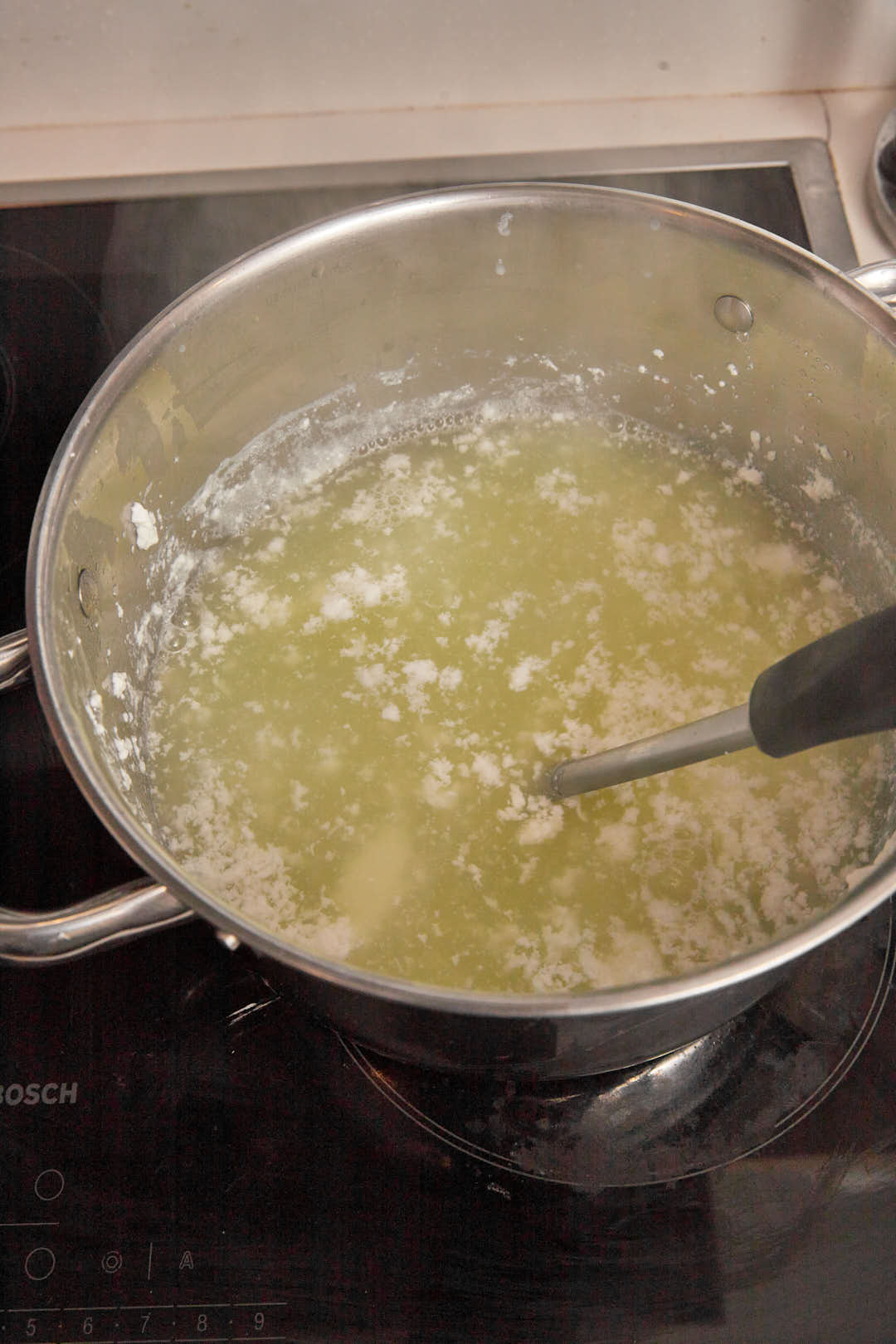
- Step 5: Keep scooping out all the curds you can until all that’s left in the saucepan is this yellow liquid which you can discard.
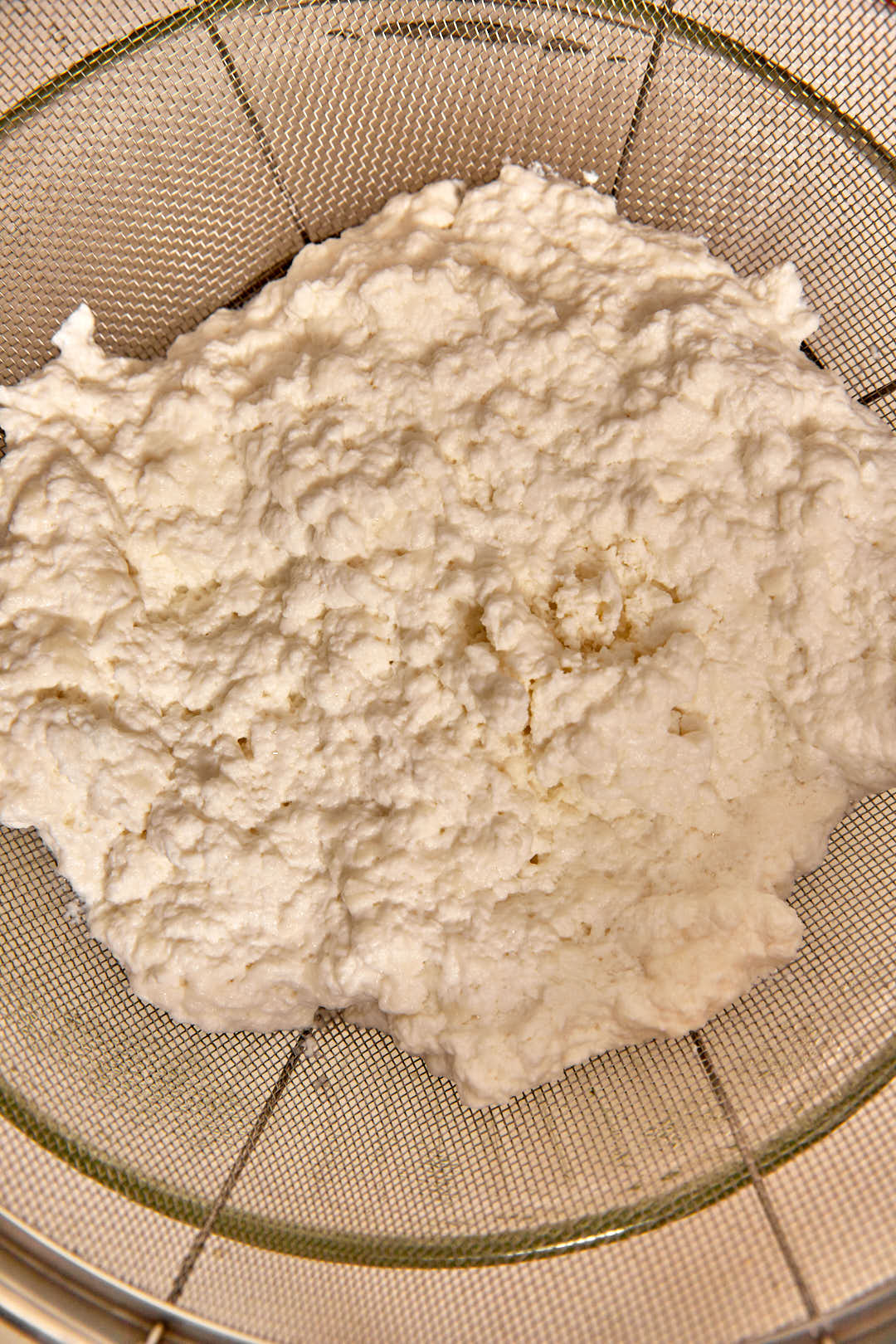
- Step 6: Place the curds into a strainer set over a large bowl to drain.
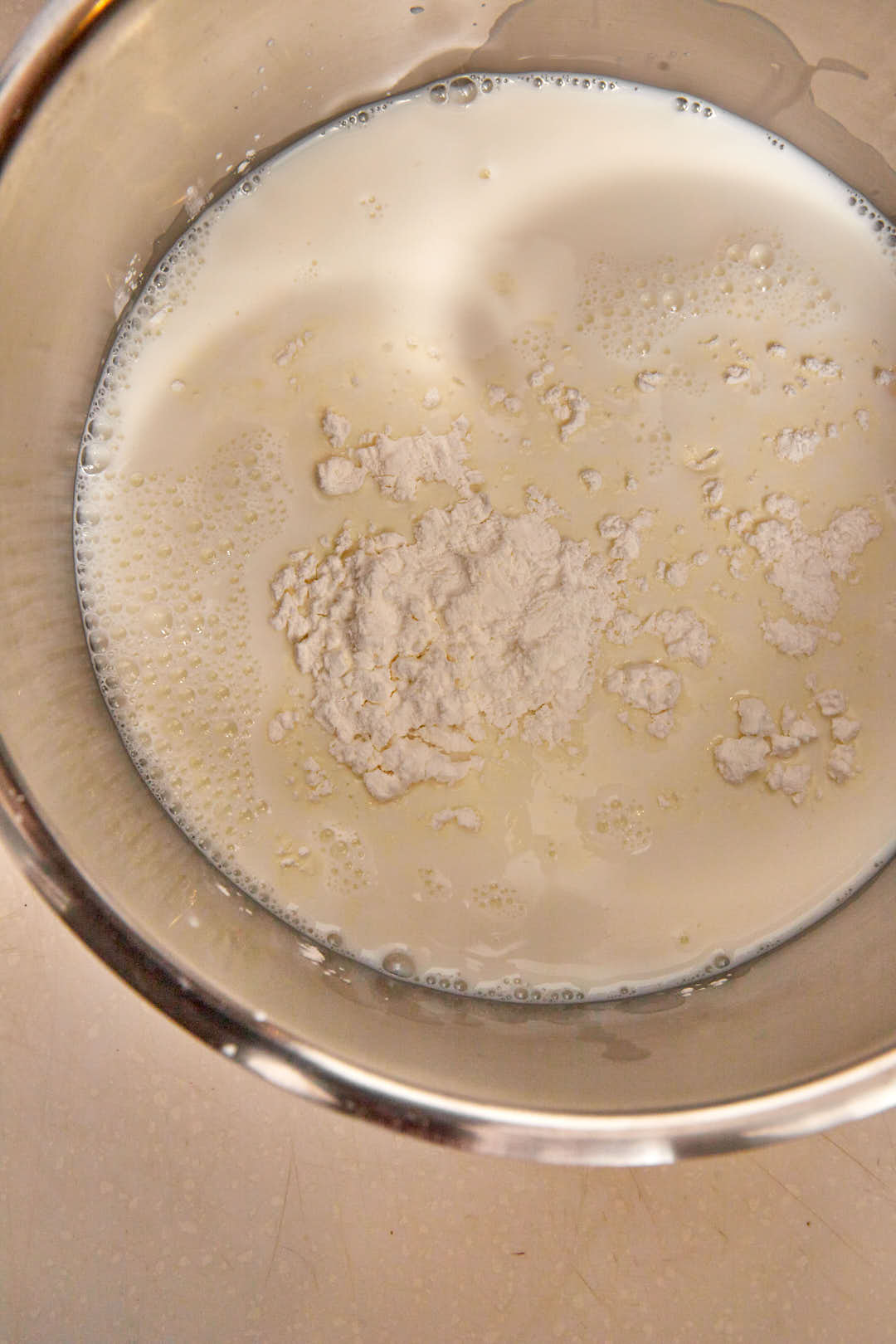
- Step 7: Place the remaining milk and cornstarch in a medium saucepan.
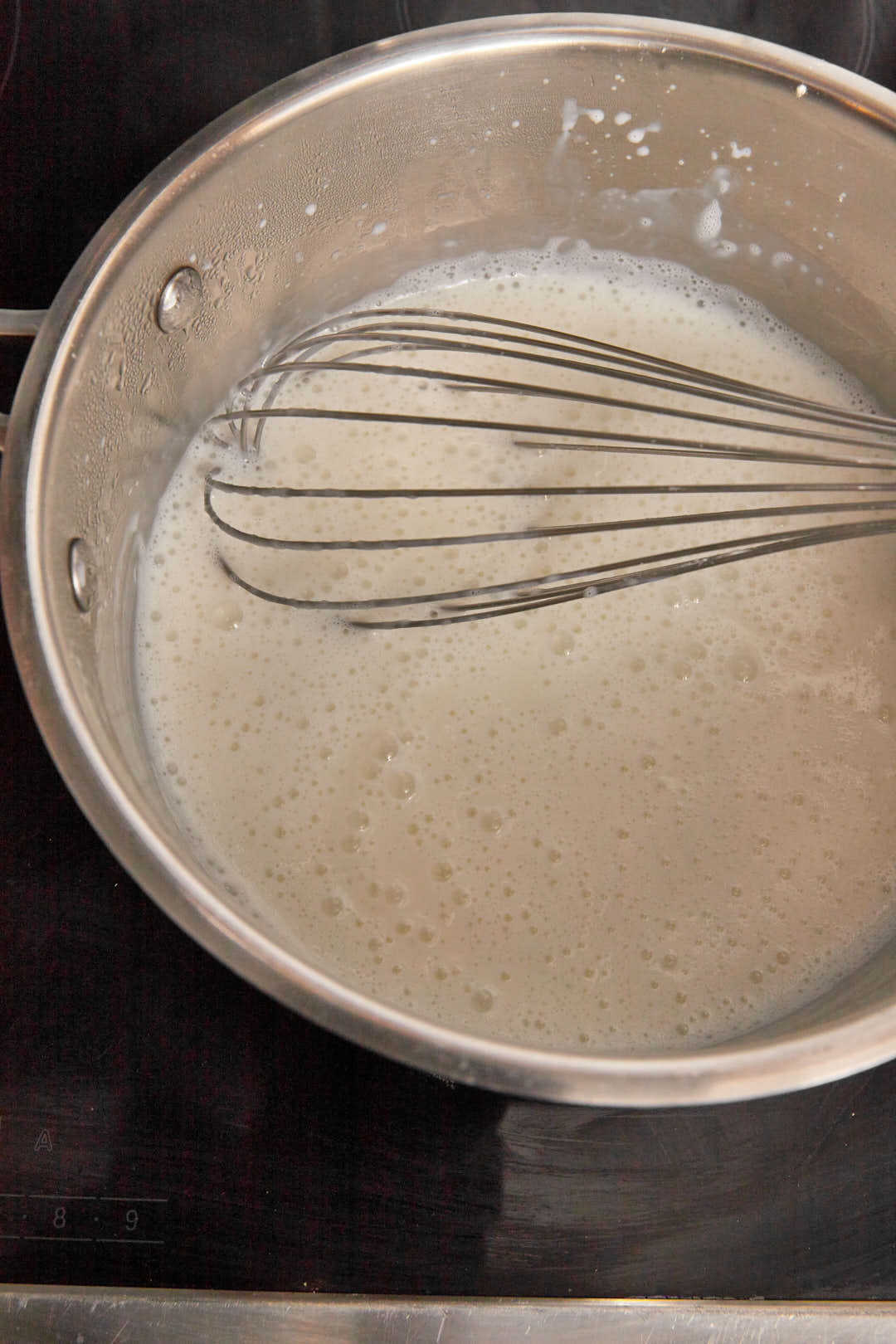
- Step 8: Place this mixture on medium low heat and whisk to combine.
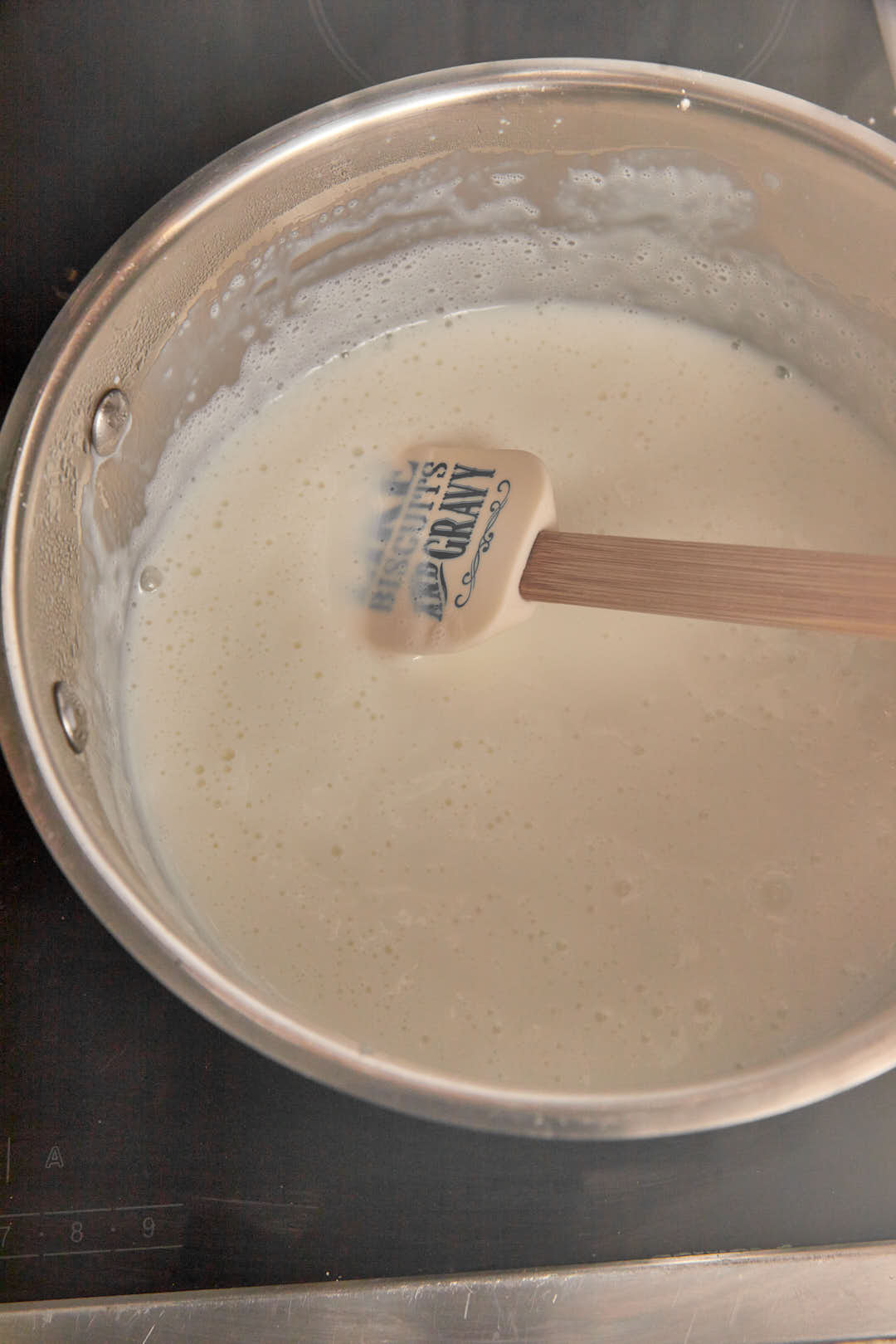
- Step 9: Once the mixture has thickened into a custard,remove from the heat and cool 5-10 minutes.
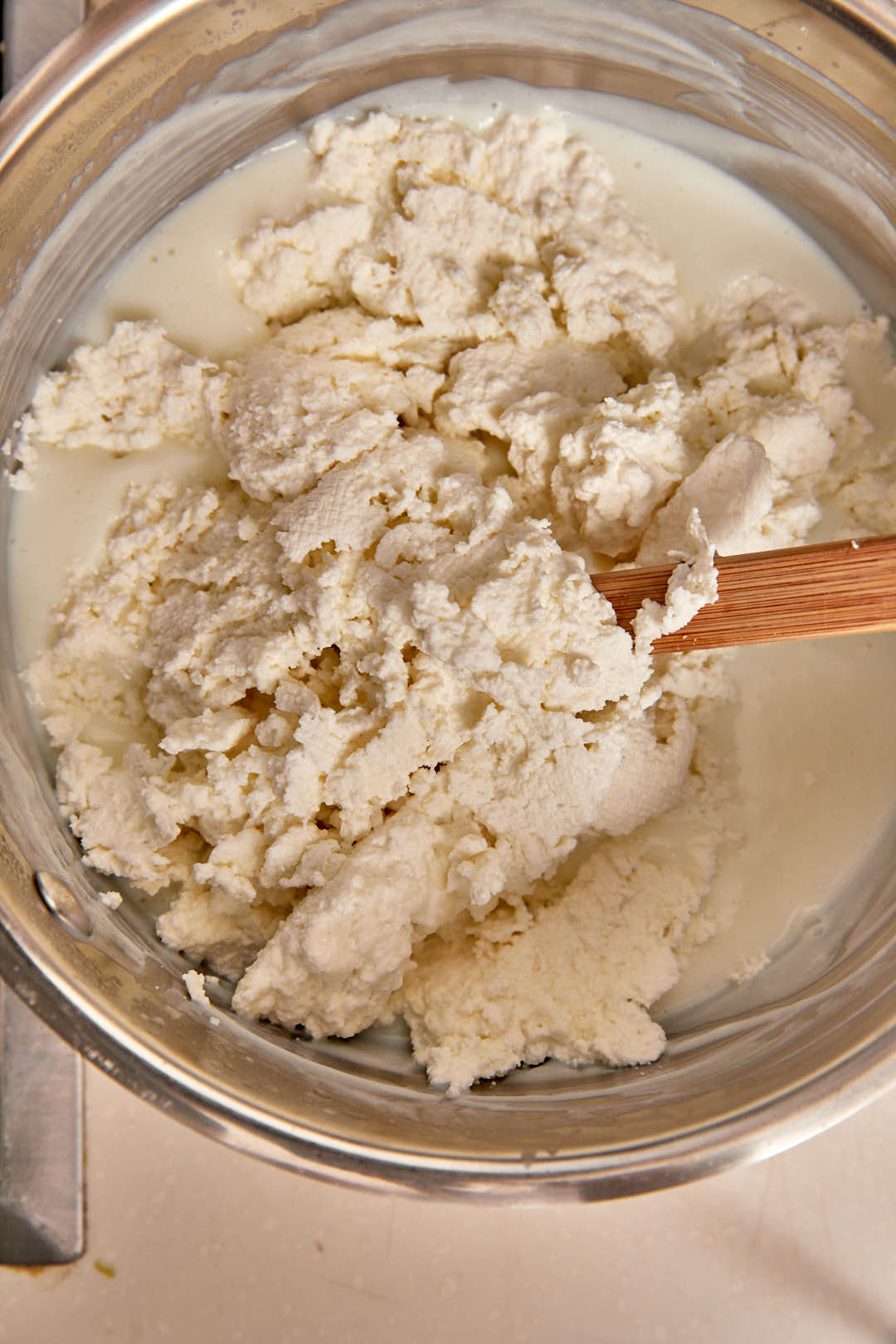
- Step 10: Add the milk curds from before into this custard.
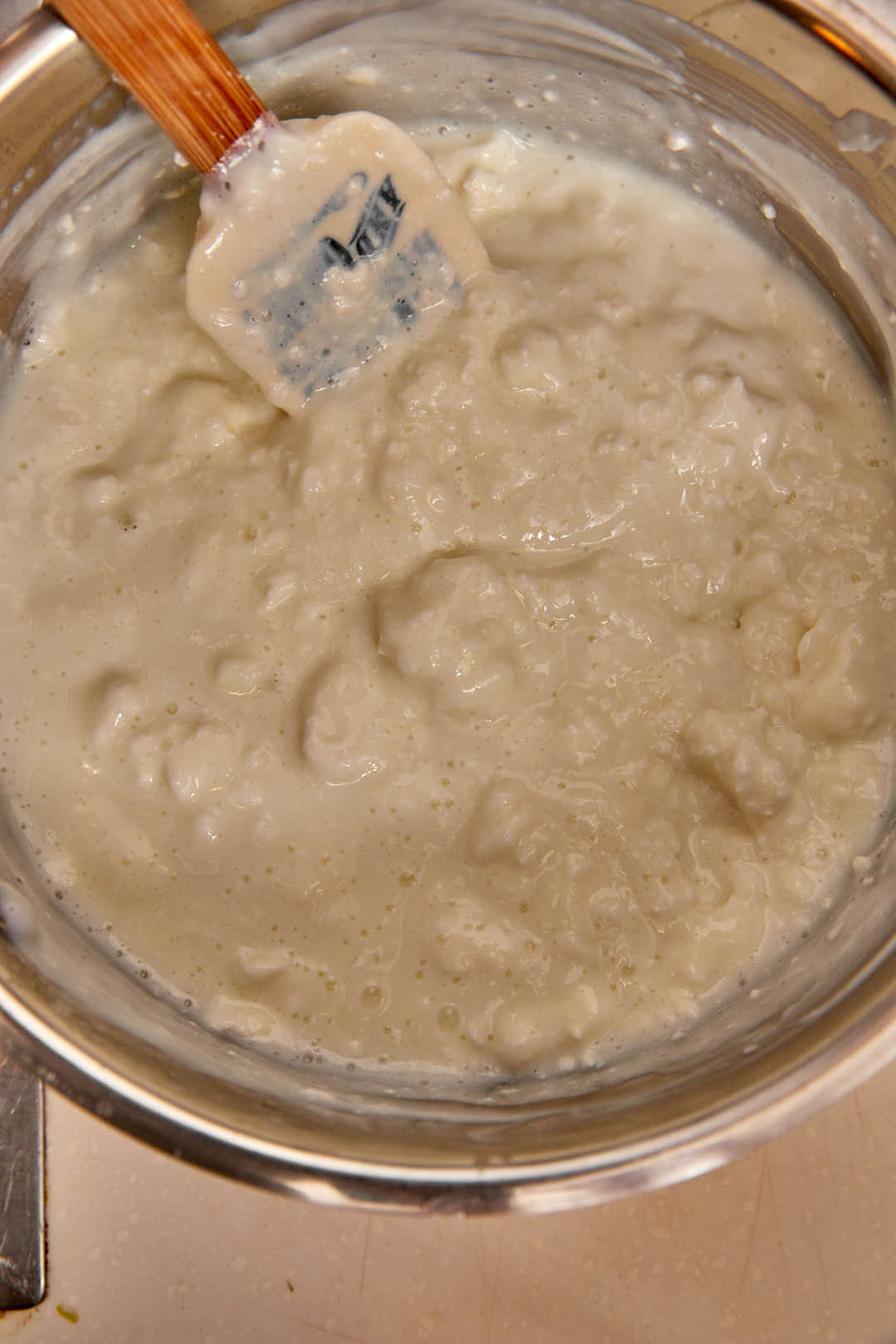
- Step 11: mix to combine, breaking up larger clumps if desired, into texture you like.
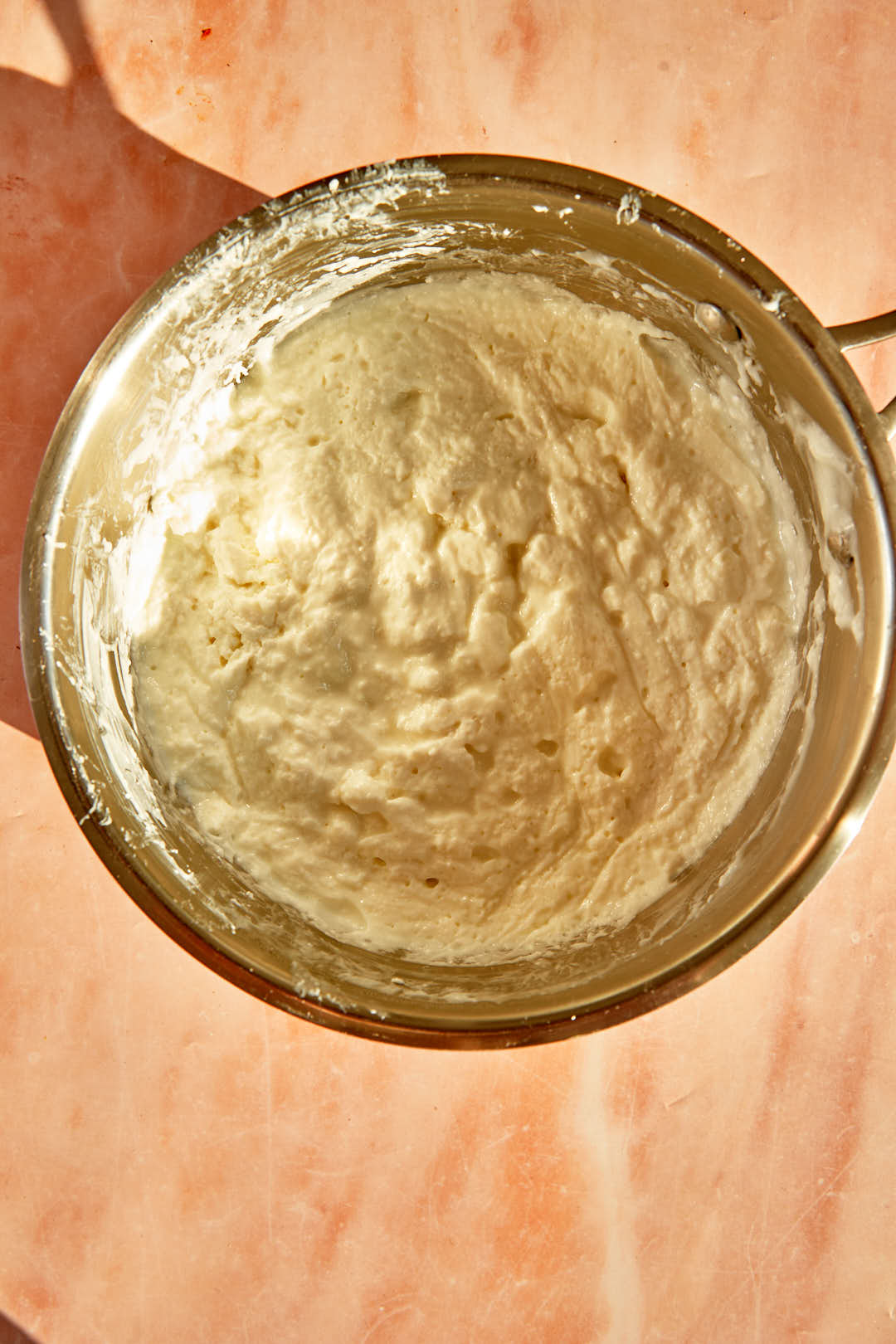
- Step 12: Place plastic wrap directly on the surface of the cream and refrigerate for at least 2 hours.
Hint: Keep stirring the milk and cornflour until the mixture thickens, so you don’t burn the custard or get lumpy custard.
Pro Tip
You can dictate the texture of the ashta cream- break up the lumps more thoroughly or briefly blend or immersion blend the cream for a very smooth ashta, or barely mix for a textured ashta (my preference).
How to serve ashta (Middle Eastern clotted cream):
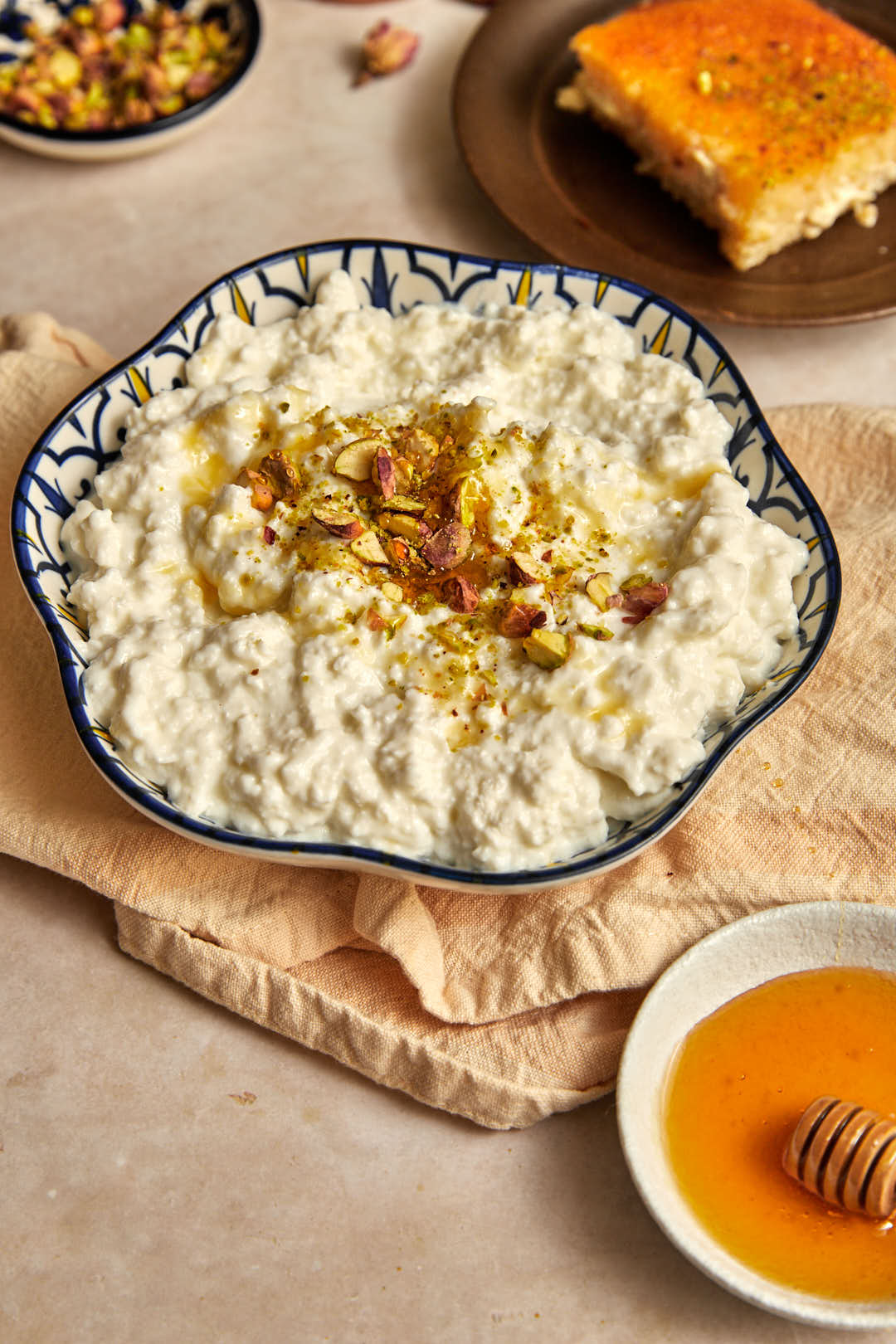
- On its own- I love ashta so much, I’m extremely happy to just enjoy it on it’s own, especially scooped up into thick pita bread. I drizzle with honey or sugar syrup, and top with chopped pistachios.
- As a component in traditional desserts:
- Layali Lubnan- A semolina dessert topped with qashta, and drizzled with simple syrup- I love this so much!
- Qatayef Asafiri – Mini folded pancakes filled with Ashta, garnished with crushed pistachios and a drizzle of sugar syrup.
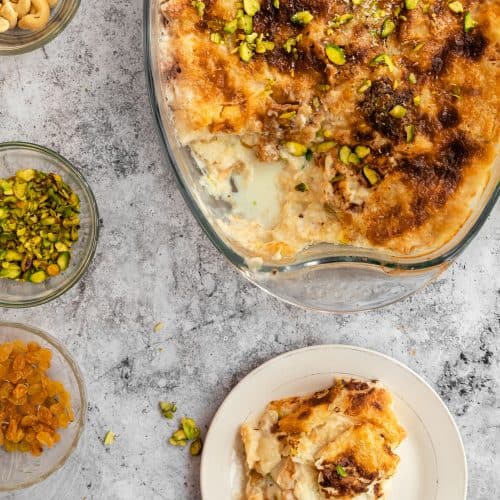
- Kunafa with Cream: As the cream layer in this kunafa.
- Warbat Bil Ashta – Filo dough layered or stuffed with Ashta and soaked in sugar syrup
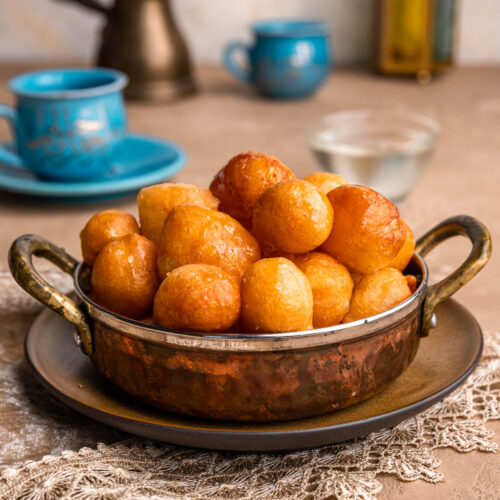
- Znoud El Sit – Filo dough rolled and filled with Ashta, fried until crisp, then dipped in syrup.
- Halawet El Jibn – Semolina and cheese dough rolls filled with Ashta, one of my favorite desserts ever
- Aish El Saraya – Caramelized bread crumbs topped with ashta- another one of my absolute favorite desserts.
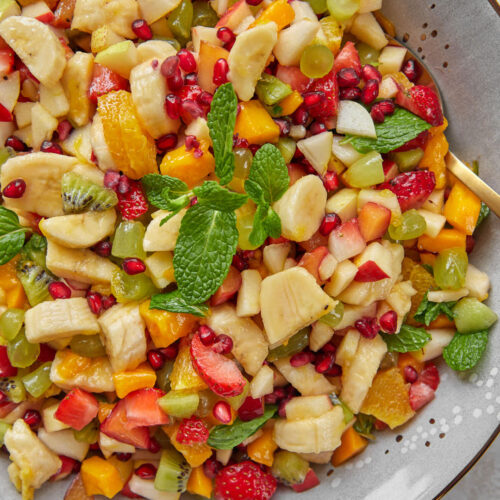
- A fruity pairing: Arabic cream is the perfect addition to a fruit cocktail and would be incredible on top of this fruit salad. Alternately try the below:
- Strawberries & Ashta – Slice fresh strawberries and top with a generous scoop of chilled Ashta.
- Figs & Honey – Serve halved fresh figs filled or topped with the cream and a drizzle of honey or rose syrup.
- Bananas – Place a mound of ishta on a plate, then slice bananas on top, top with crushed nuts and a drizzle of honey.
- Stuffed dates – Pit dates and fill with Ashta, then roll in crushed pistachios.
- Pomegranate Cups – Serve in small bowls with pomegranate seeds.
Recipe variations:
- Flavoring: use just rose water or orange blossom water if you don’t want to use both.
- Sweeten– add 2 heaped tablespoon of granulated sugar to the milk and cornstarch mixture while simmering to make the cream sweeter.
Storing Leftovers:
Store in an airtight container in the fridge for 3–5 days and to prevent a skin from forming on top of the cream, press plastic wrap directly onto the surface. It isn’t recommended to freeze ashta as the texture could be affected by thawing.
Expert tips and tricks:
- Use full‑fat milk and cream for a traditional rich taste.
- Skim the surface of the boiling milk thoroughly, use a fine mesh strainer or slotted spoon to grab as many curds as you can.
- If you don’t like texture to your ashta, you can mash or blend it briefly after combining the cream and curds.
- When making the cream part of this recipe (the milk and cornstarch), whisk constantly until thickened to avoid the cream from burning at the bottom and/or becoming lumpy.
Top Tip
Make sure you chill the cream thoroughly before enjoying. Press plastic wrap directly to the surface to avoid a skin forming on top.
Recipe FAQs:
It’s a rich, clotted cream from the Levant made from thickened milk and milk curds—used widely in desserts and as a standalone treat.
No! I used full fat milk , and that gives you perfectly creamy ashta.
No, the texture will most likely be detrimentally affected once you thaw it.
Yes! We use cornstarch, and no flour in this, so this is a great gluten free dessert or component to a dessert.
If you liked this recipe, you might like:
Looking for other recipes like this? Try these:


Pairing:
These are my favorite dishes to serve with ashta:


Love this recipe? Please leave a 5-star 🌟🌟🌟🌟🌟rating in the recipe card and a comment!
Stay in touch with me through social media @ Instagram, Pinterest, and Facebook. Don’t forget to tag me when you try one of my recipes!

Ashta Cream
Equipment
- large saucepan
- Slotted spoon or strainer
Ingredients
For the curds:
- 2.5 liters whole milk (10.5 cups)
- 5 tablespoon white vinegar
For the cream:
- 500 ml whole milk 2 cups
- 4 tablespoon cornstarch (cornflour)
- 1 tablespoon orange blossom water
- 1 tablespoon rose water
Instructions
- Add the 2.5 liters of whole milk to a large saucepan over medium high heat. Once the milk starts to simmer, but before it comes to a rolling boil, add the white vinegar.
- Let the mixture boil for 2 minutes without stirring, at which point you'll see curd s form at the surface. After 2 minutes, use a slotted spoon to remove the clotted cream curdles from the surface, and place them in a strainer that's set over a large bowl. Keep scraping off the surface of the milk until all that's left is the yellow liquid in the pot. You can discard the yellow liquid.
For the cream:
- In another medium saucepan, add the 500ml of whole milk and whisk in the cornstarch. Place this mixture on medium low heat, and keep whisking until thickened into a custard that's a gravy like consistency. Off the heat, whisk in the orange blossom and rose water.
- Cool for 5-10 minutes, then add in all the clotted cream curds from the strainer and mix to combine. You can break up the larger clumps, but I don't like this too smooth, the texture is a key component of ashta! Place plastic wrap directly on the surface of the cream and refrigerate for at least 2 hours before using in recipes or enjoying. This will last 4-5 days in the fridge.
Video
Notes
Ingredient Notes:
- Whole Milk: Use only full fatmilk for both the curdling and cream base. Skim or low-fat milk won’t yield the same rich texture.
- White Vinegar: This helps curdle the milk quickly. You won’t taste it!
- Cornstarch: Also known as cornflour, this thickens the milk into a custard-like cream.
- Rose Water & Orange Blossom Water: These give Ashta its signature Middle Eastern aroma. You can use just one if you prefer a milder floral note.
Recipe Tips for Success:
- Skim Thoroughly: When making the curds, keep skimming the surface of the milk with a slotted spoon until only yellow whey remains, so you get as much ashta yield as possible
- Whisk Constantly: While thickening the milk with cornstarch, whisk continuously to prevent lumps and avoid burning the bottom of the pan.
- Let the Cream Cool Slightly Before Combining: Mix in the curds after the cream has cooled for 5–10 minutes so the curds don’t immediately melt into the cream.
- Preserve Texture: Don’t overmix if you prefer a more traditional, slightly grainy texture. You can also lightly mash the curds if you like it smoother.
- Use Plastic Wrap Properly: Press plastic wrap directly onto the surface of the cream to prevent a skin from forming as it chills.
- Chill Before Serving: Ashta tastes best after chilling for at least 2 hours. This it to set properly and sets the stage if you want to use it in a dessert.
❄️ Storing Leftovers:
- Refrigerate: Store in an airtight container in the fridge for up to 3–5 days.
- Prevent Skin Formation: Always place plastic wrap directly on the surface before sealing the container to avoid skin forming.
- Do Not Freeze: Freezing will cause separation and ruin the creamy consistency—Ashta is best enjoyed fresh or freshly chilled.
Leave a Reply