
If you love old-world Middle Eastern desserts with real soul, this hilbeh — also called hilba or Palestinian fenugreek cake — is one you absolutely need to try. This is my grandma’s recipe, and I swear you’ll feel the love through the screen. Made with toasted semolina, warm fenugreek, and a fragrant floral syrup, this traditional dessert is rustic, aromatic, and incredibly comforting. It’s the kind of recipe that fills your kitchen with nostalgia and tastes even better the next day.
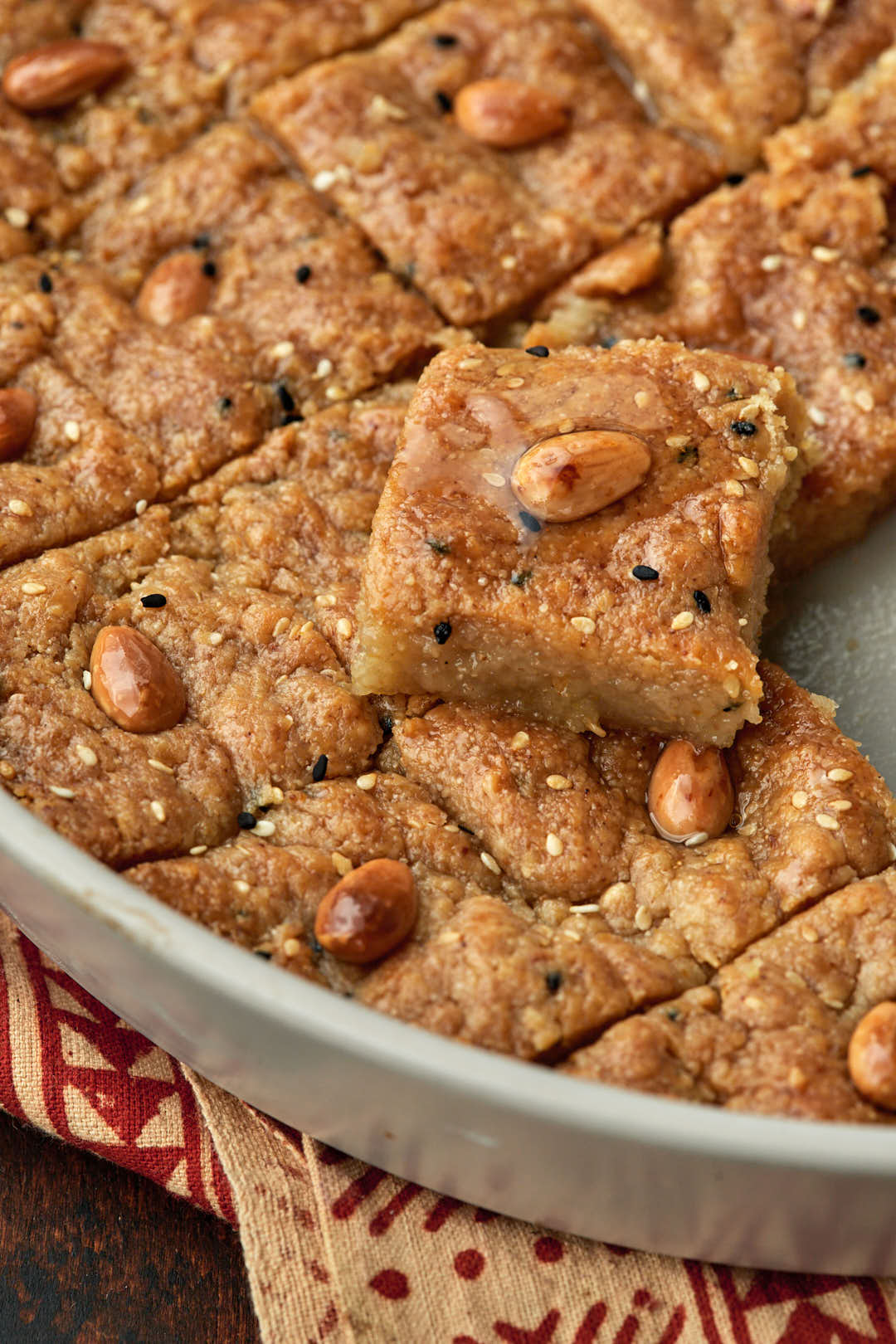
What is hilbeh?
Hilbeh is a classic dessert found across Palestine and parts of the Levant. It’s especially common in colder months, thanks to the warming qualities of fenugreek, but you can enjoy it year round with tea or Arabic coffee.
Many families prepare hilba during celebratory Ramadan iftars and for Eid feasts or special occasions — it has that cozy “home” feeling that’s impossible to replicate in store-bought versions.
If you enjoy semolina desserts like Basbousa with Cream, or a classic Namoura, this is a must-try addition to your Middle Eastern recipe collection.
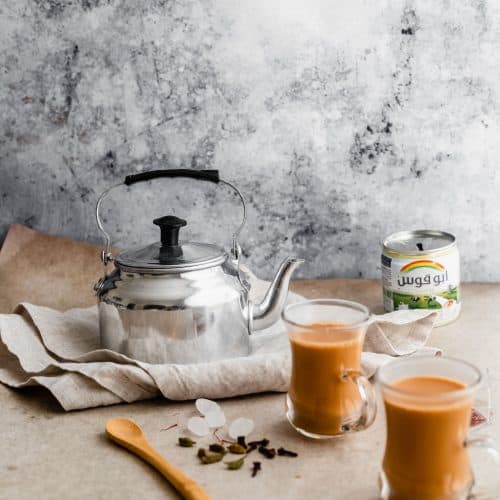
Try it with a cup of my famous karak chai, one of the most popular recipes on my website!
Jump to:
What makes this recipe so good:
- Authentic flavor — This is hilbeh done the traditional Palestinian way, such a throwback to a classic and much loved Middle Eastern semolina dessert.
- Incredible texture — A deep golden top with syrup-soaked, almost fudgy tender slices.
- Fragrant and comforting — The fenugreek, toasted semolina, sesame, and nigella seeds create a unique aroma. Fenugreek also incredible health benefits- it eases digestion, and has been linked to lowering blood sugar and cholesterol.
- Make-ahead friendly — This hilba tastes even better the next day, and stays delicious in an airtight container for up to two weeks.. The syrup really infiltrates the bars and the texture remains great.
What makes this a great Every Little Crumb recipe:
It’s my way of bringing our traditional Middle Eastern flavors to your household, straight from my grandmother. I try to be as clear and simple in the instructions so you can recreate it perfectly in your house. It’s a beautiful dessert, which is my favorite category of foods, and lasts for a long time!
Ingredients you need:
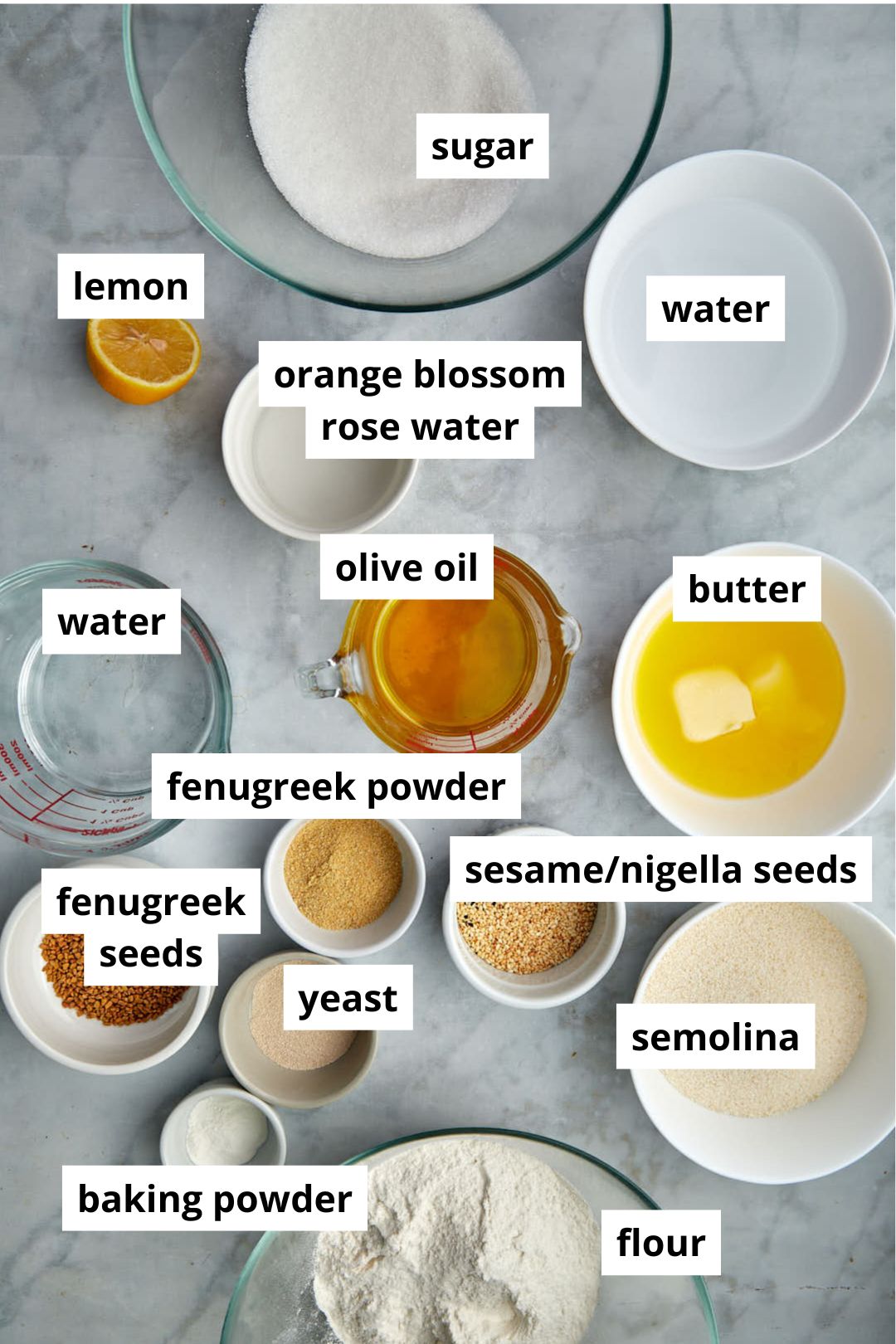
- Water – Used for steeping the fenugreek seeds.
- Fenugreek seeds – The core flavor; steeping extracts their flavor without all their bitterness.
- Fine semolina – Toasting enhances nuttiness and depth.
- Instant yeast – Gives a slight rise without making the cake fluffy.
- Sugar – Helps activate the yeast.
- All-purpose flour – Provides structure and balances the semolina.
- Toasted sesame seeds – Adds warmth and crunch; white or black both work.
- Nigella seeds – Traditional and earthy; you can swap with black sesame if needed.
- Fenugreek powder (optional) – For a stronger fenugreek flavor.
- Baking powder – Helps with lightness and even texture.
- Melted butter – Adds richness; you can also replace with ghee
- Olive oil – Keeps the dough moist and adds traditional flavor.
- For the syrup:
- White sugar – Forms the base of the syrup.
- Water – To dissolve the sugar.
- Lemon juice – Prevents crystallization and adds brightness.
- Rose water – Adds subtle floral fragrance.
- Orange blossom water – Pairs beautifully with the rose water for classic Middle Eastern aroma.
See recipe card for quantities.
How to make hilbeh:
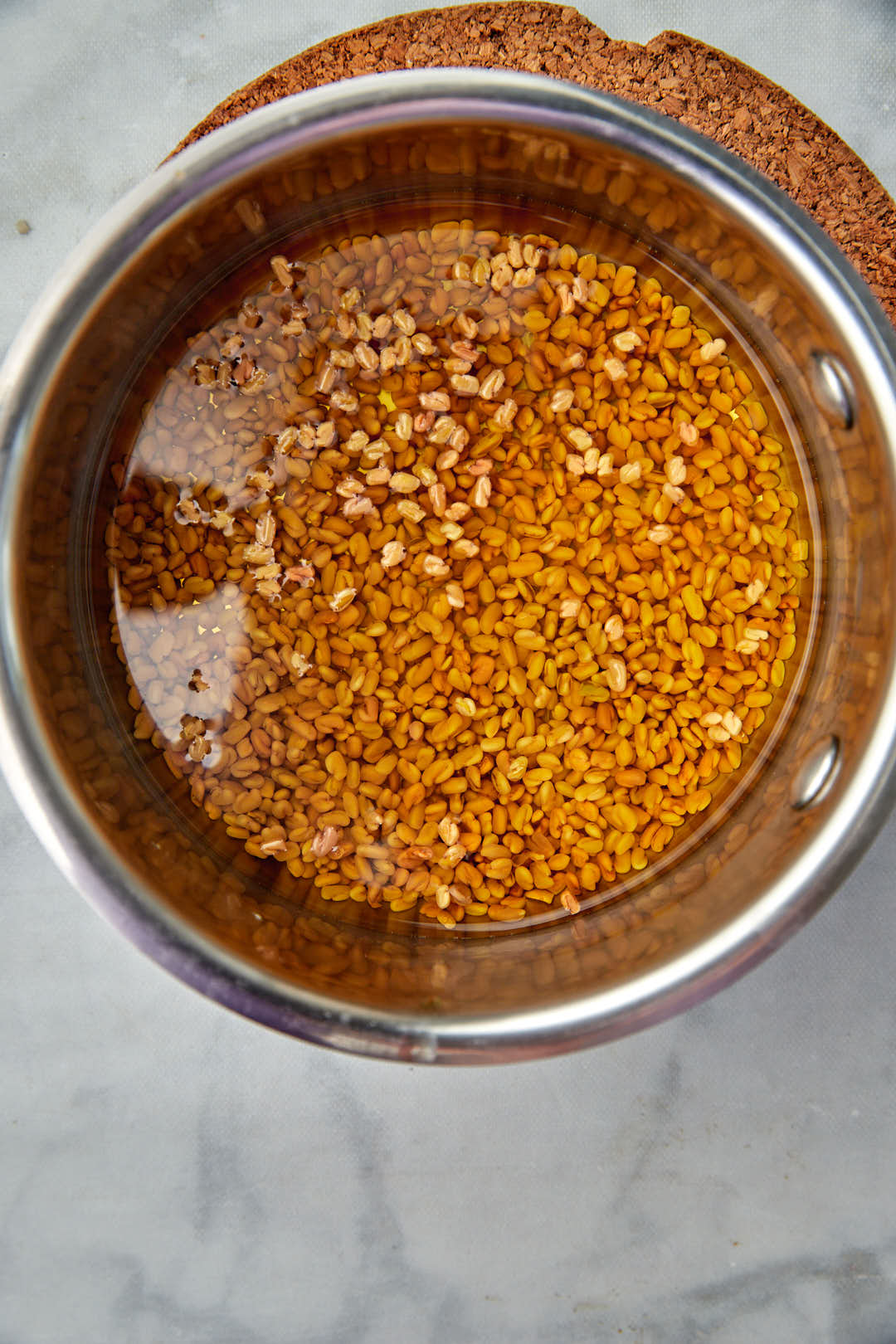
- Step 1: Boil the water, add fenugreek seeds, remove from heat, cover, and steep at least 10 minutes.
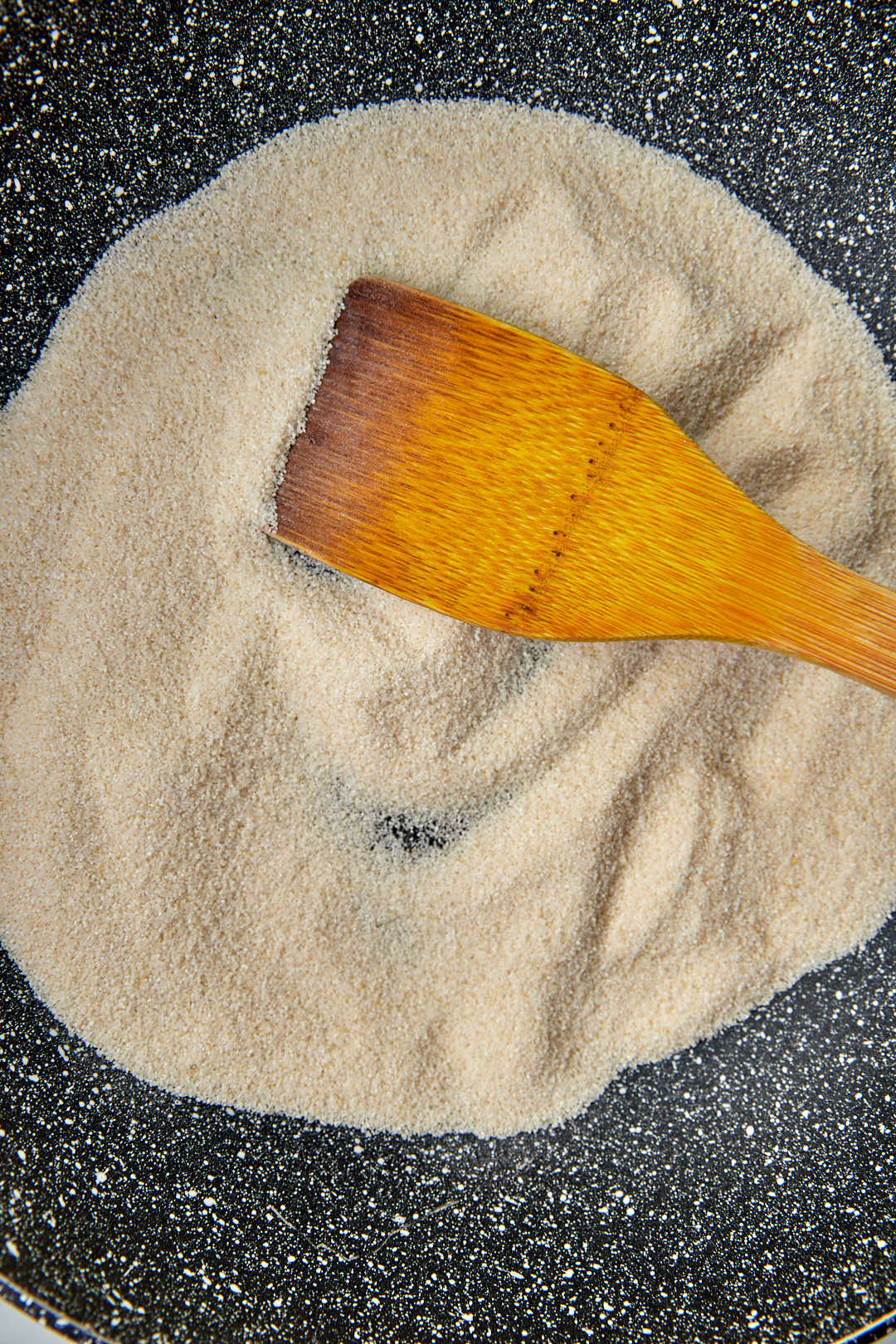
- Step 2: Add semolina to a large skillet over medium heat.
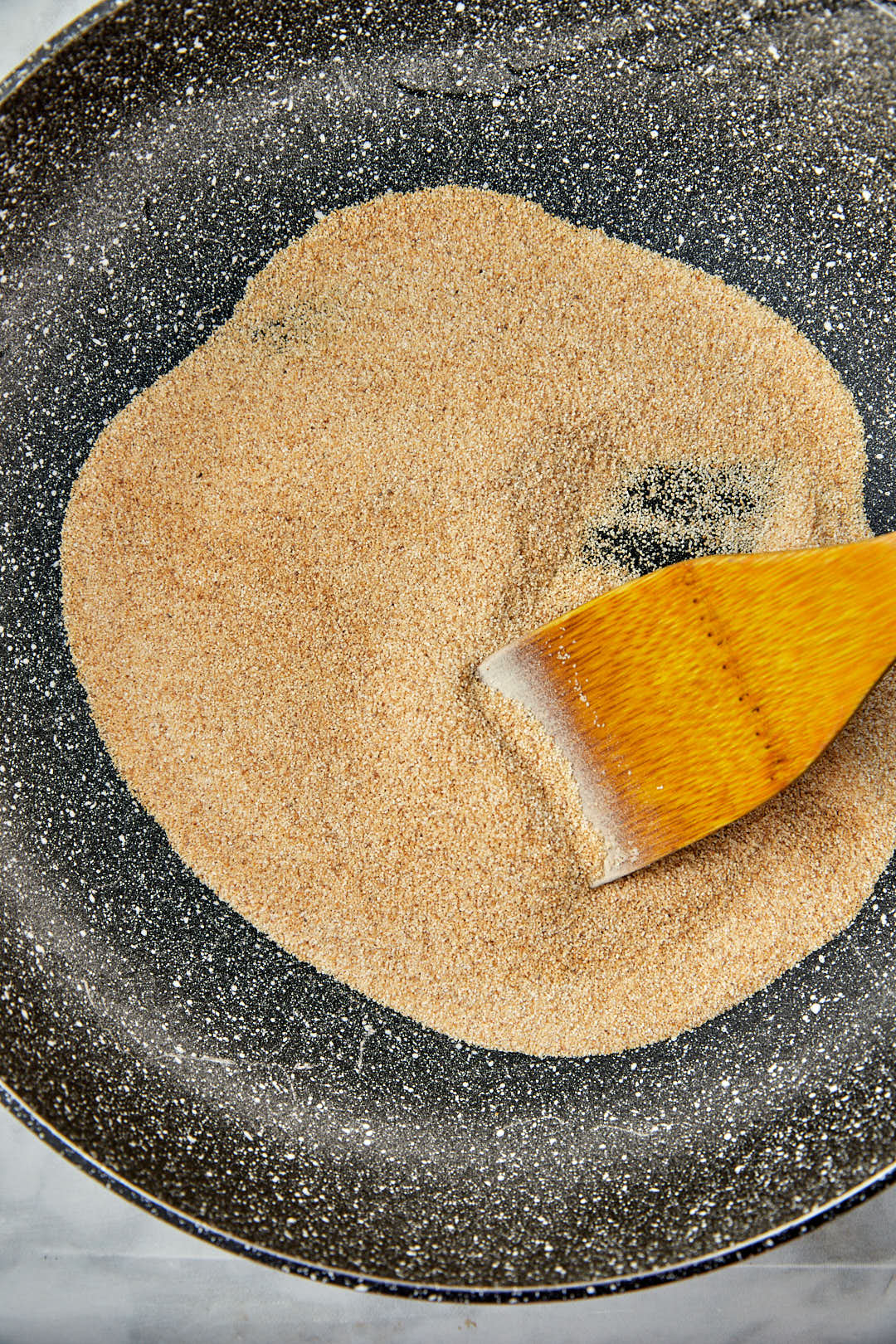
- Step 3: Toast semolina in a dry pan over medium heat, stirring often, until golden and fragrant (8–10 minutes).
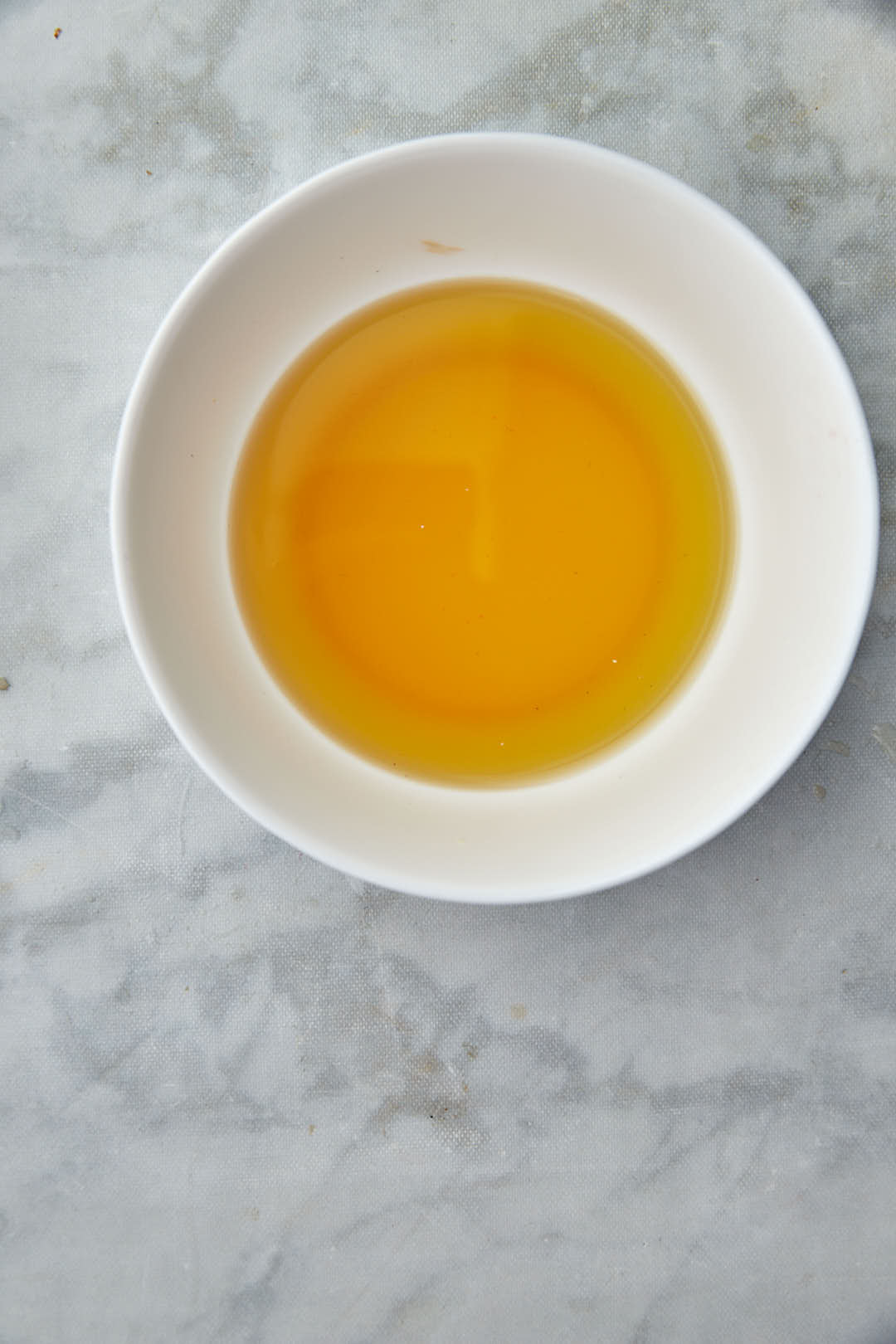
- Step 4: Strain the fenugreek water, and add the instant yeast and sugar.
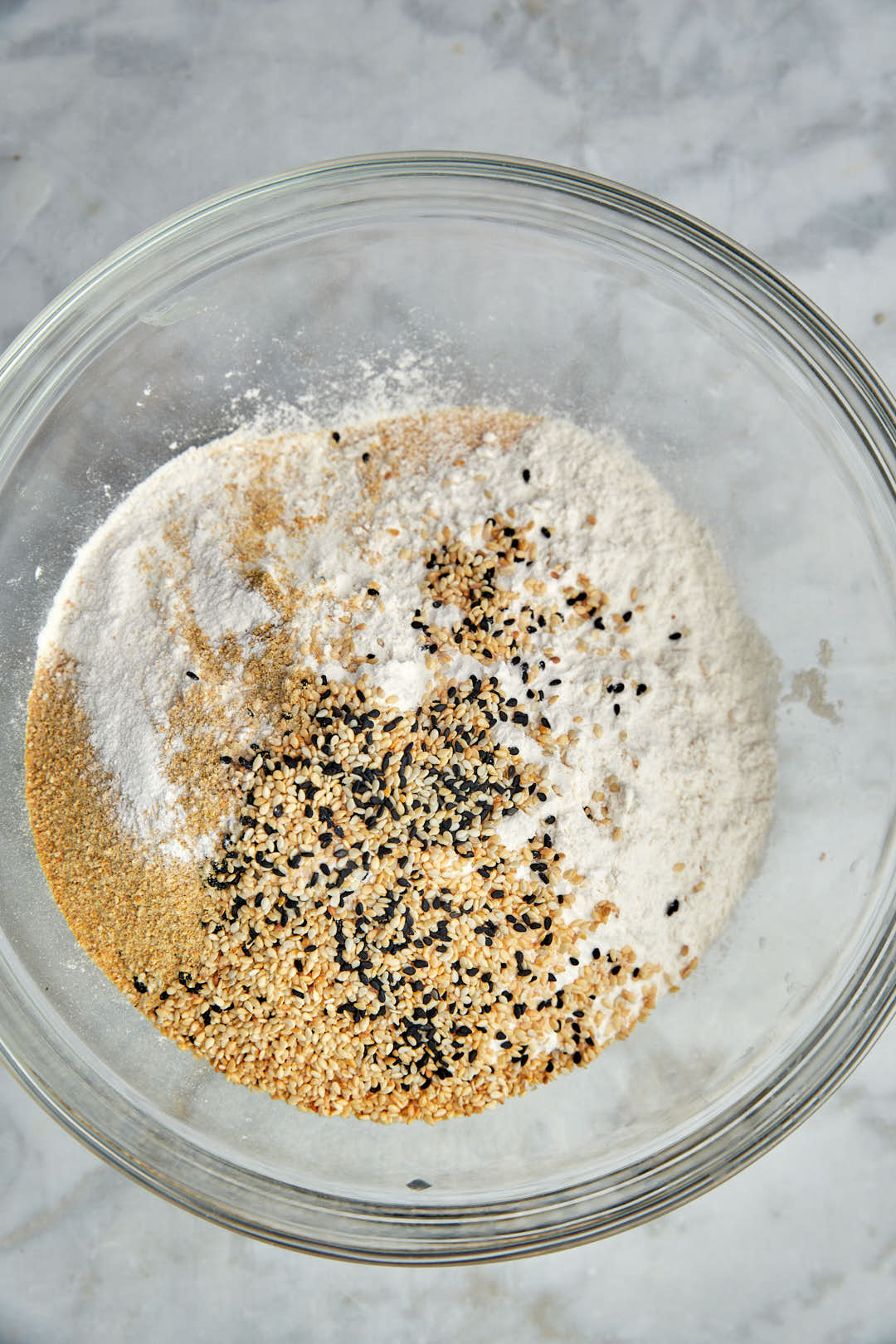
- Step 5: In a large bowl, combine the semolina, flour, sesame seeds, nigella seeds, fenugreek powder if using, and baking powder.
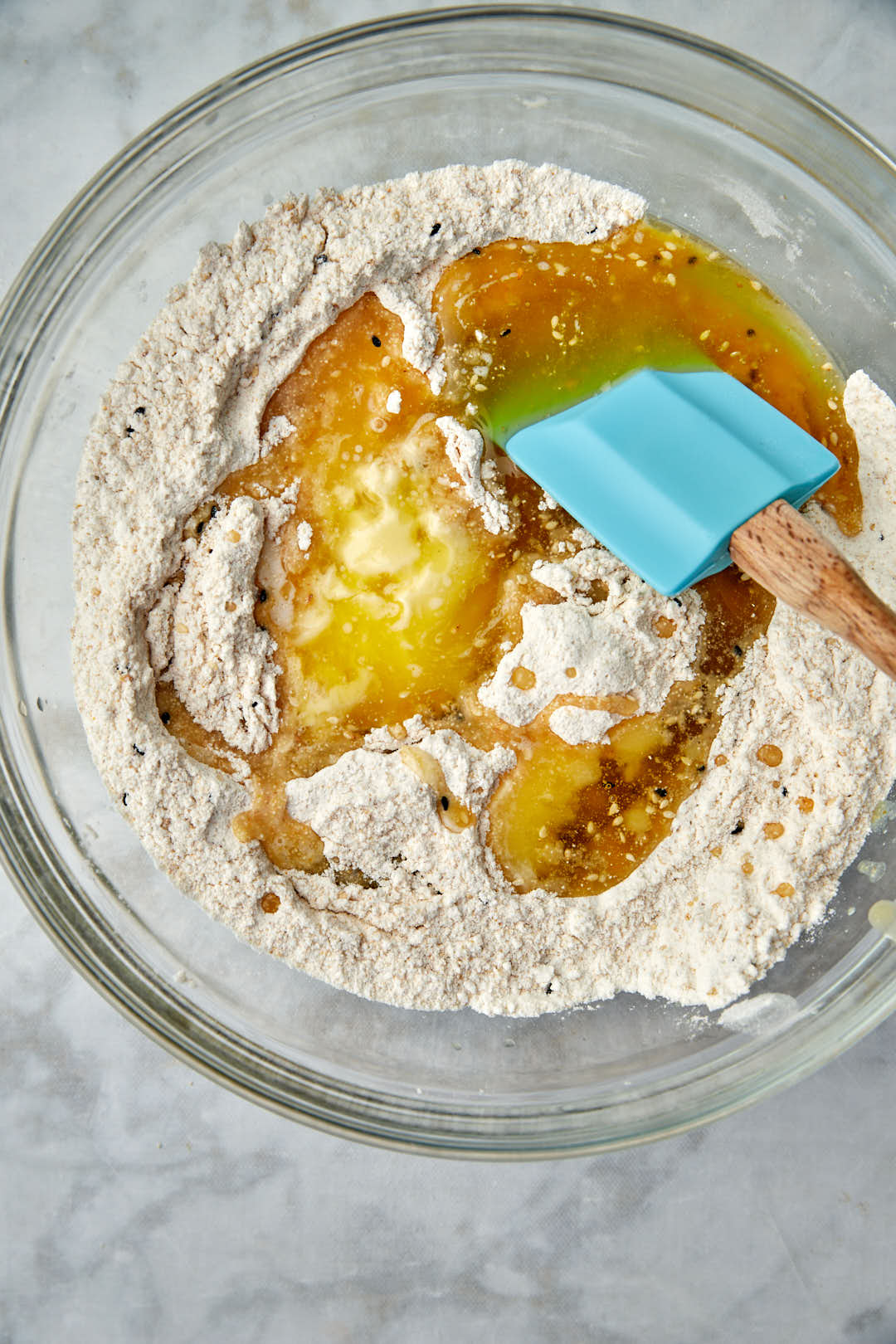
- Step 6: Add the melted butter and olive oil, and the yeast/ water mixture.
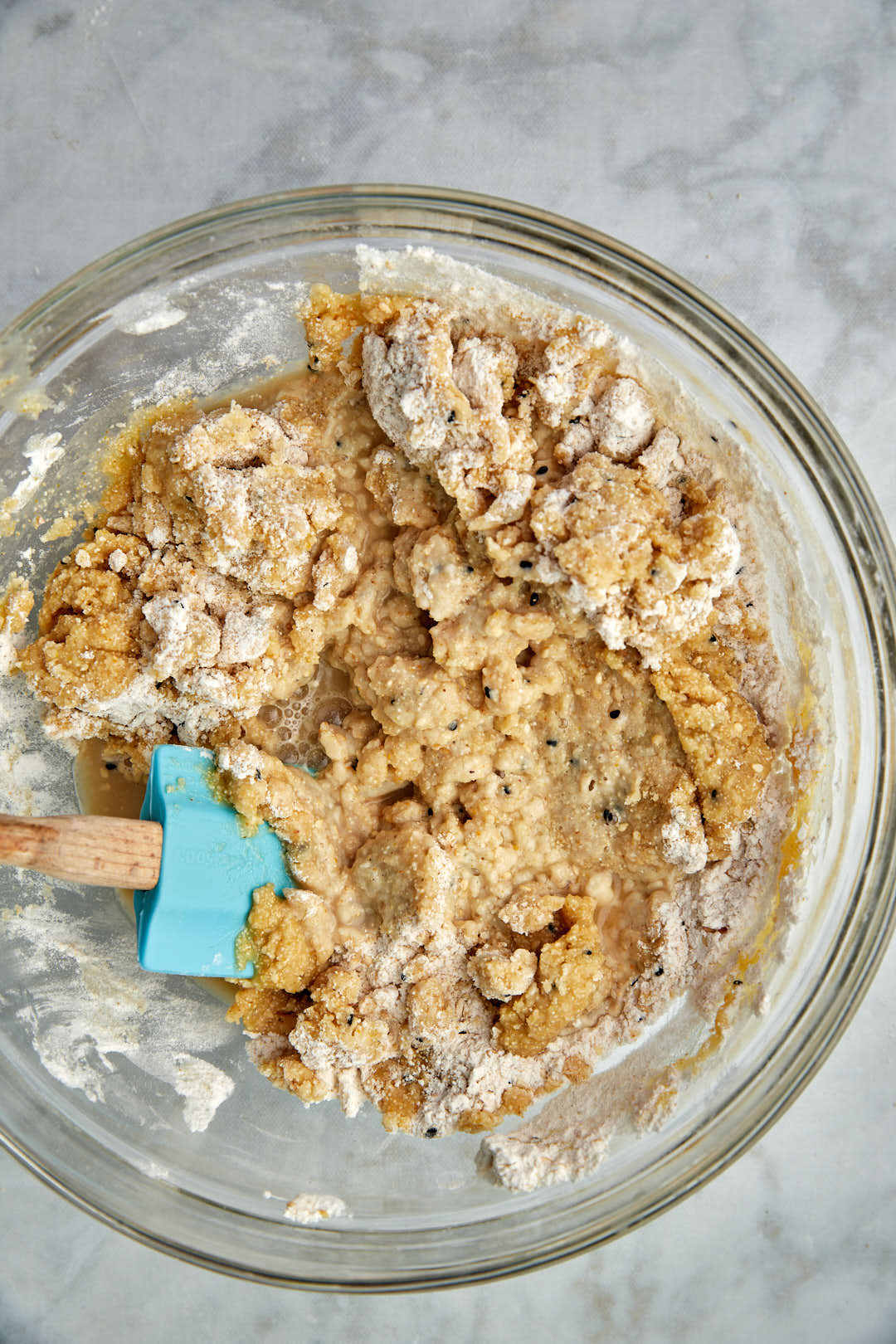
- Step 7: Combine until ingredients are mixed together
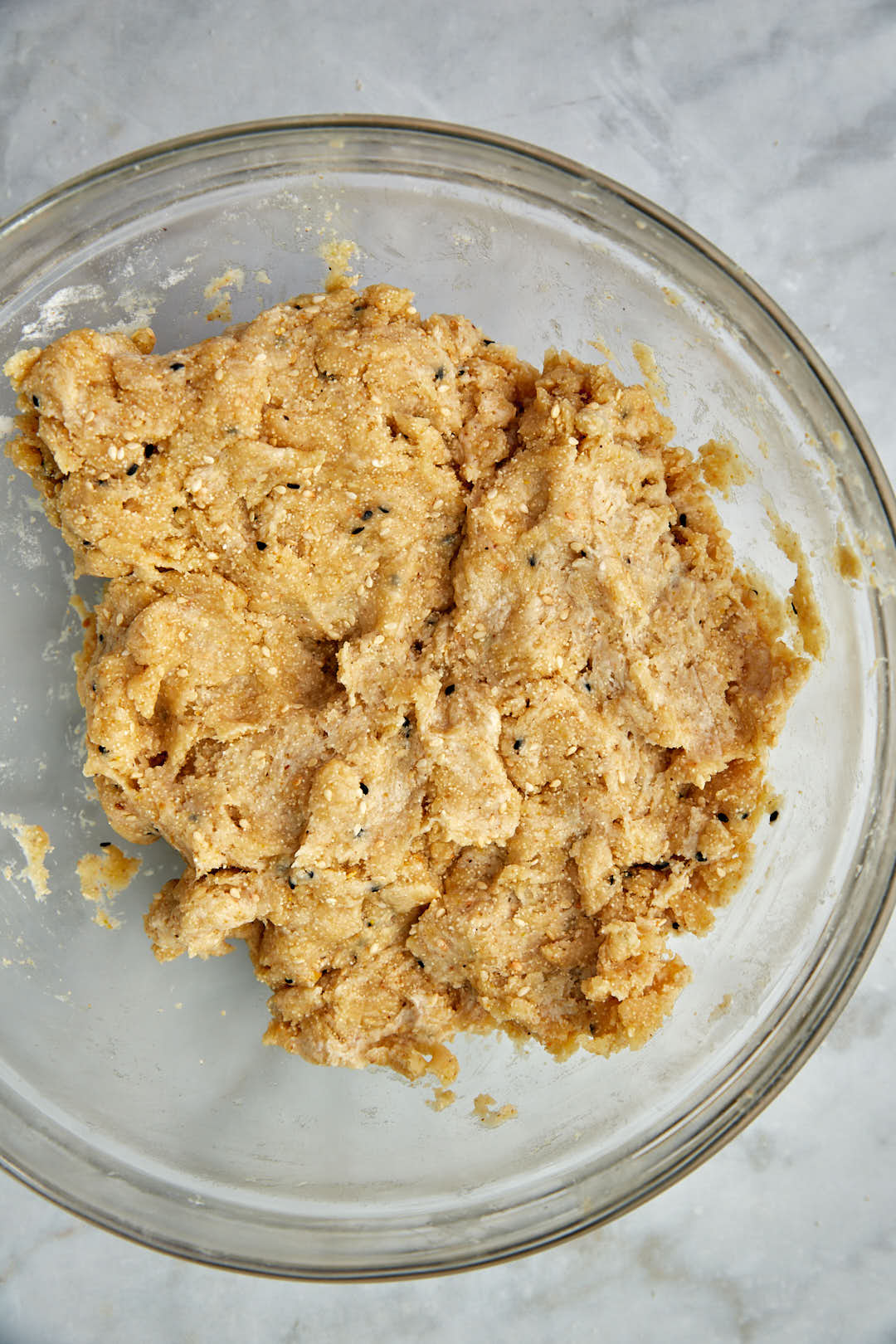
- Step 8: The dough may be a little dry, like so.
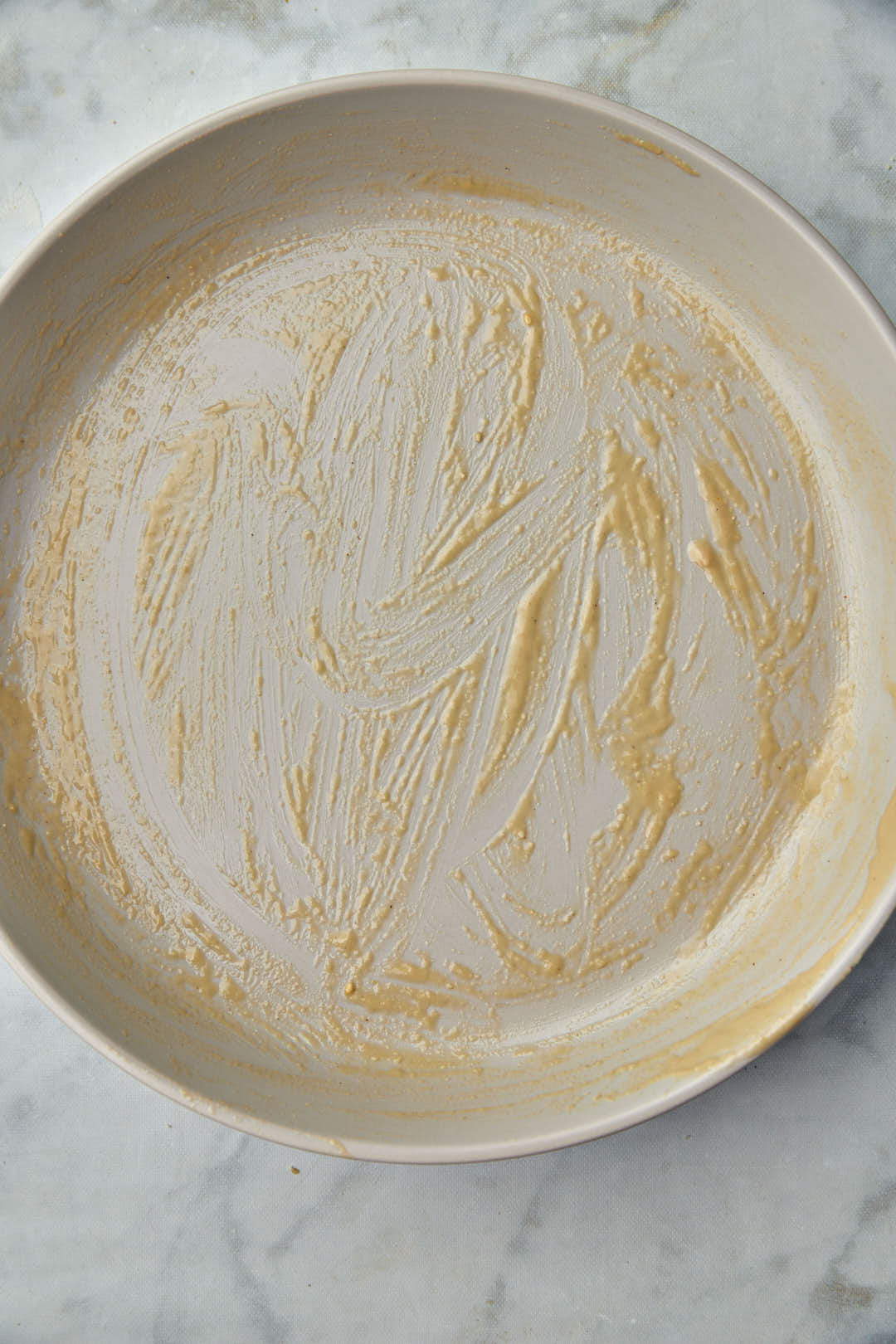
- Step 9: Grease a large circular pan with tahini.
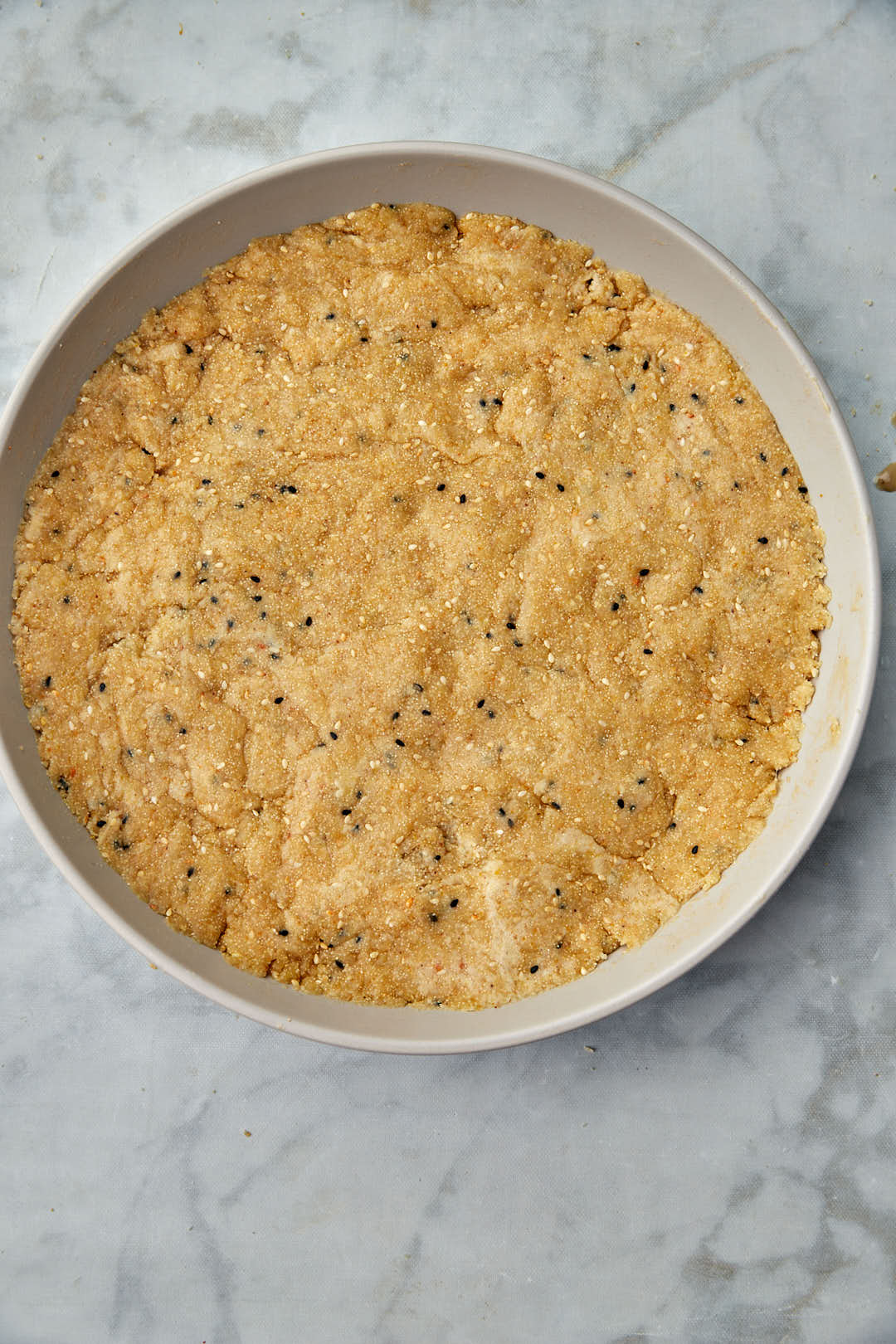
- Step 10: Press the hilbeh dough evenly into the prepared pan.
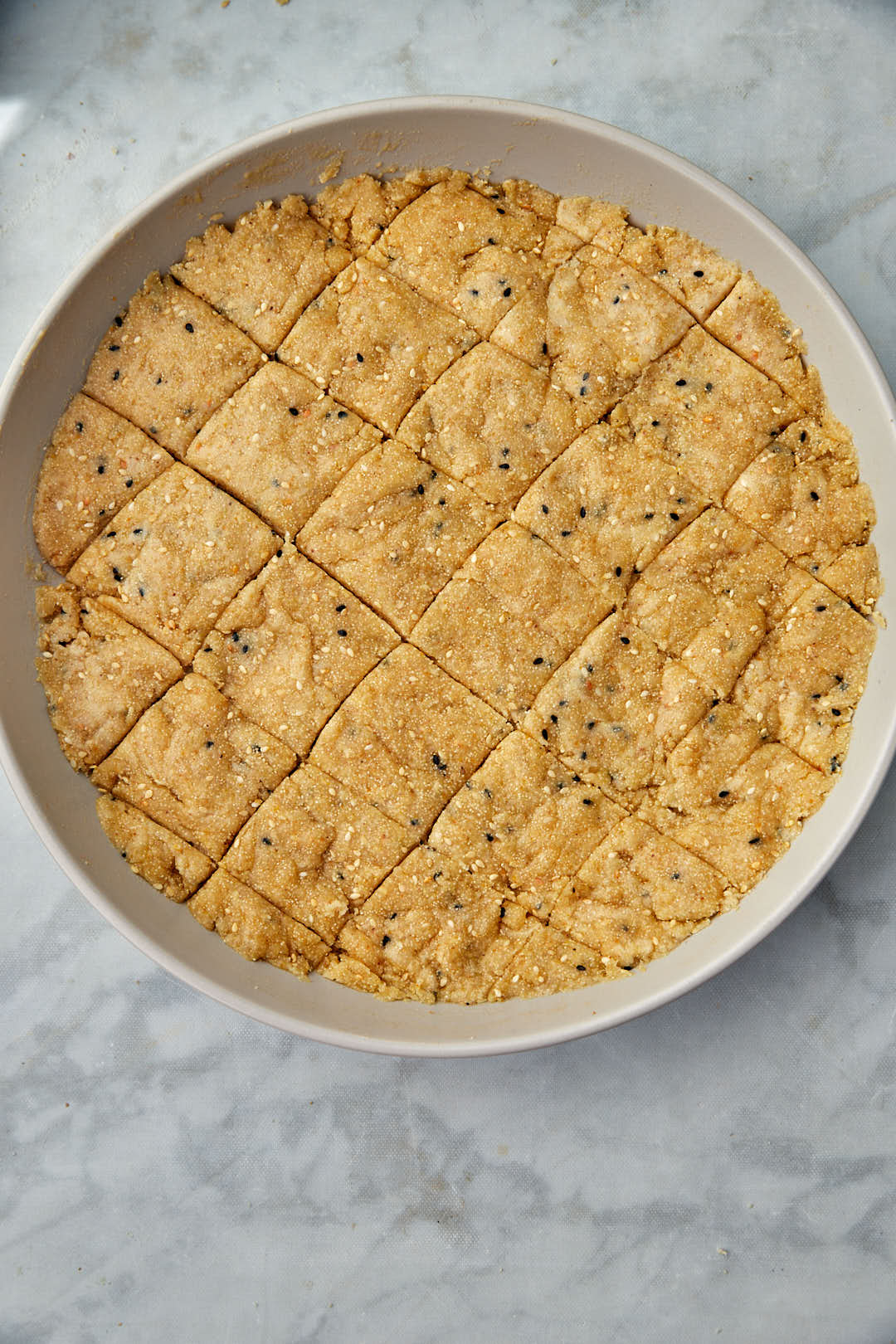
- Step 11: Cut diamond shapes all the way through the dough.
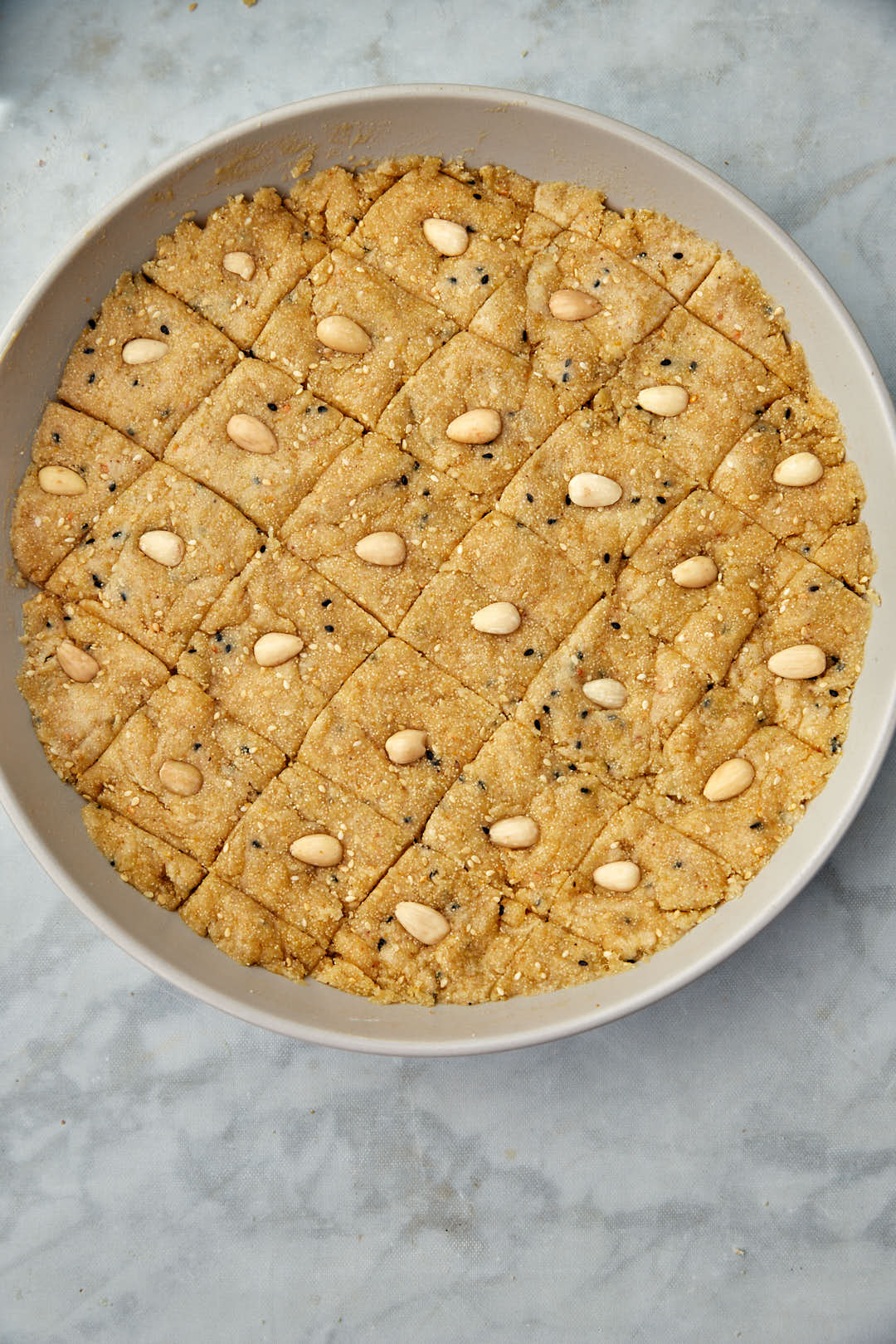
- Step 12: Top each diamond with an almond, cover the pan and rest for an hour. Meanwhile, heat the oven.
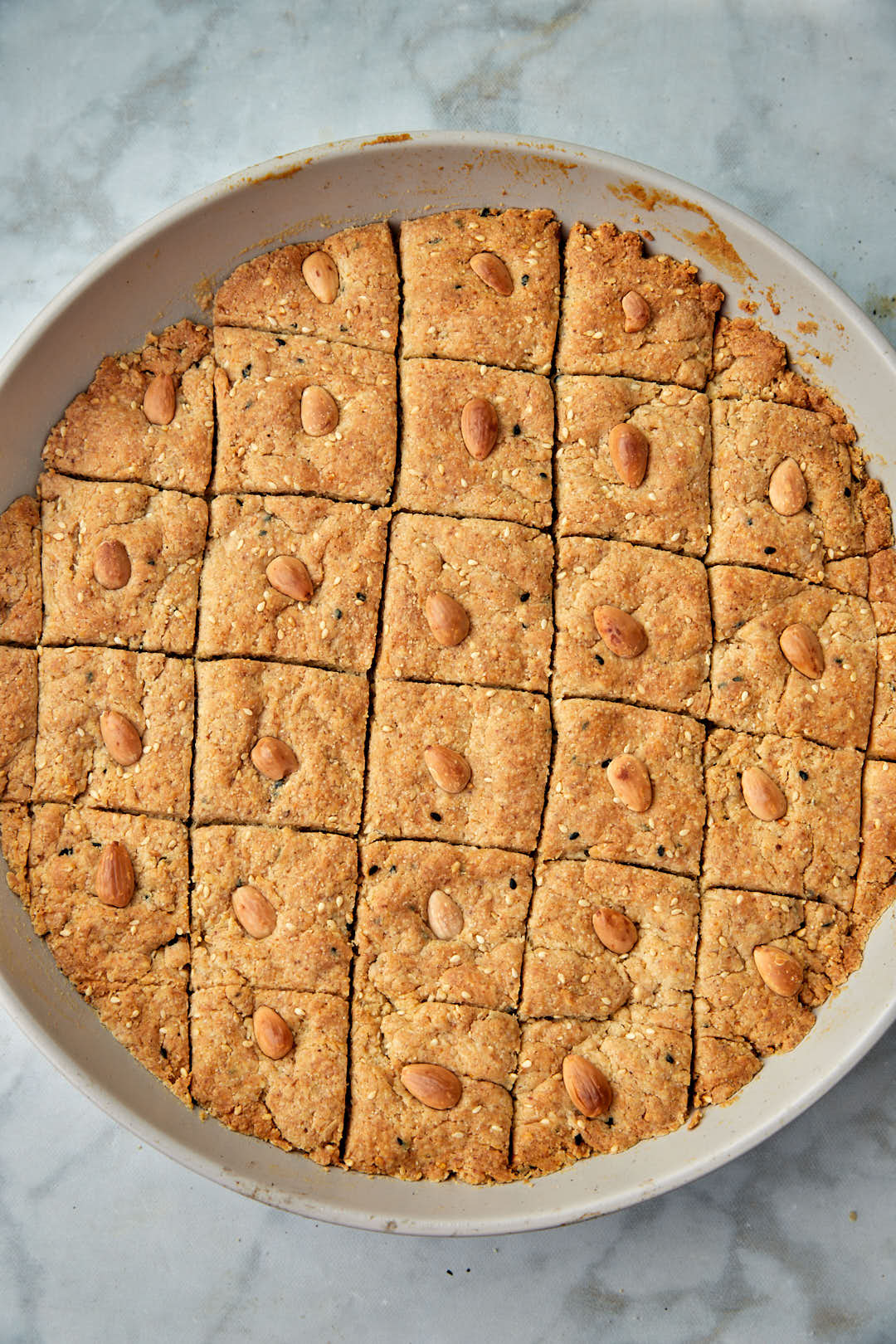
- Step 13: Bake until golden brown.
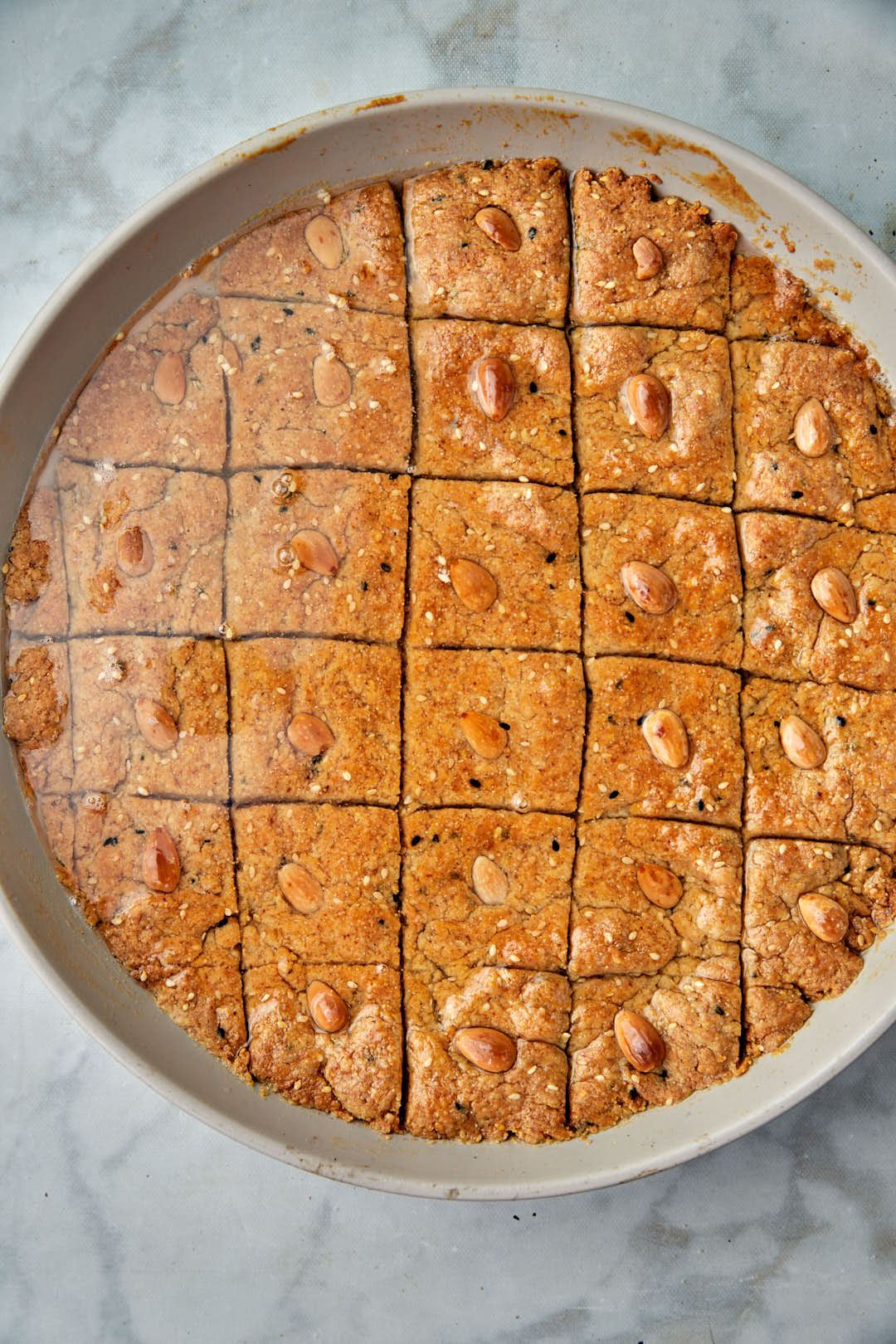
- Step 14: Pour the prepared sugar syrup onto the hot hilbeh dessert and let it soak in.
Hint: Have your sugar syrup prepared and ready so that you can immediately pour it on the hot cake. It should be cool sugar syrup on a hot cake (alternately you can do hot sugar syrup on a cold cake, but I prefer the first way).
Pro Tip
Make sure you give the hilbeh dough adequate time to rest, so the semlina aborbs the liquids and becomes fluffy and soft.
How to serve:
- Hilbeh is best served at room temperature.
- Serve with strong tea, Karak Chai, or Arabic coffee
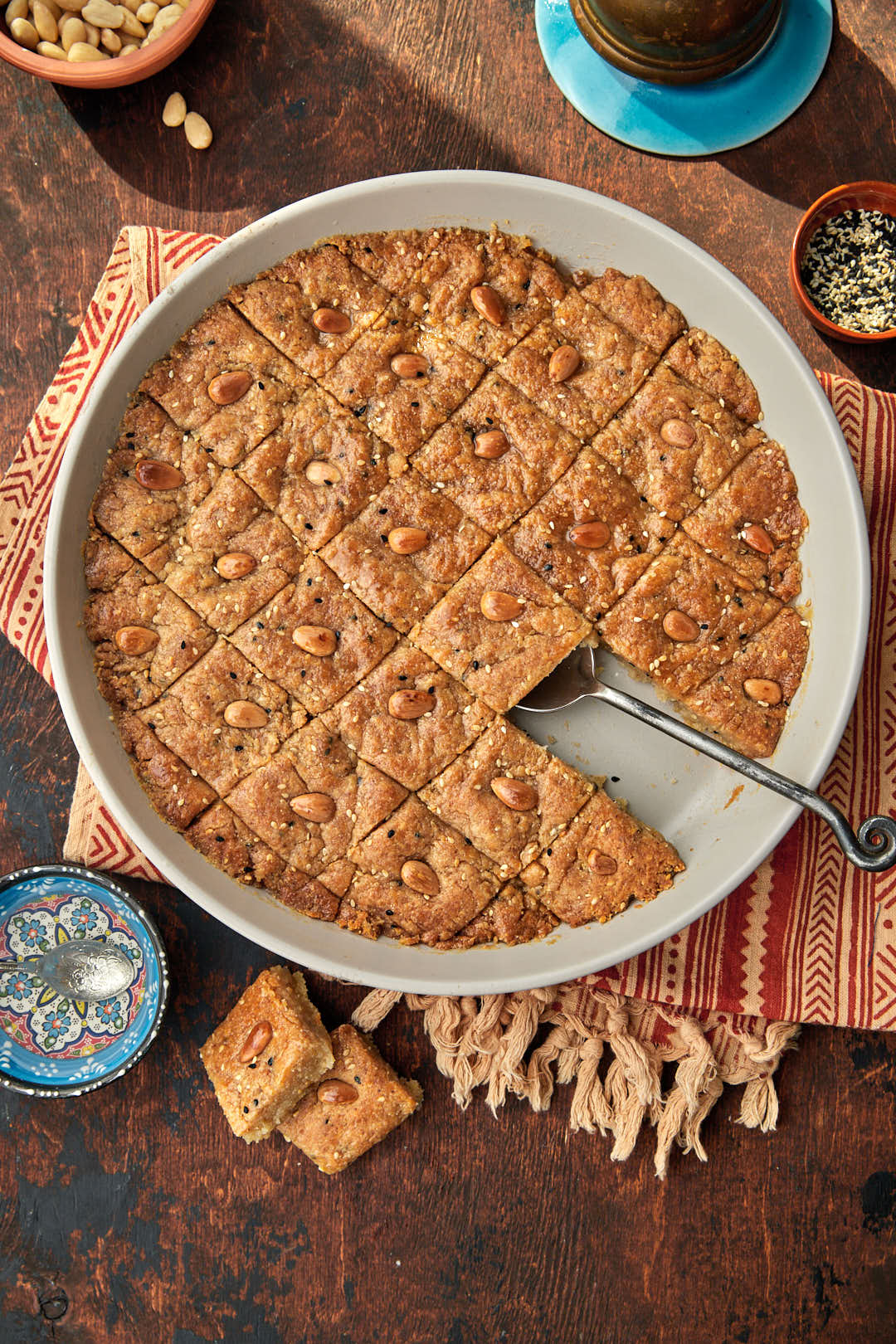
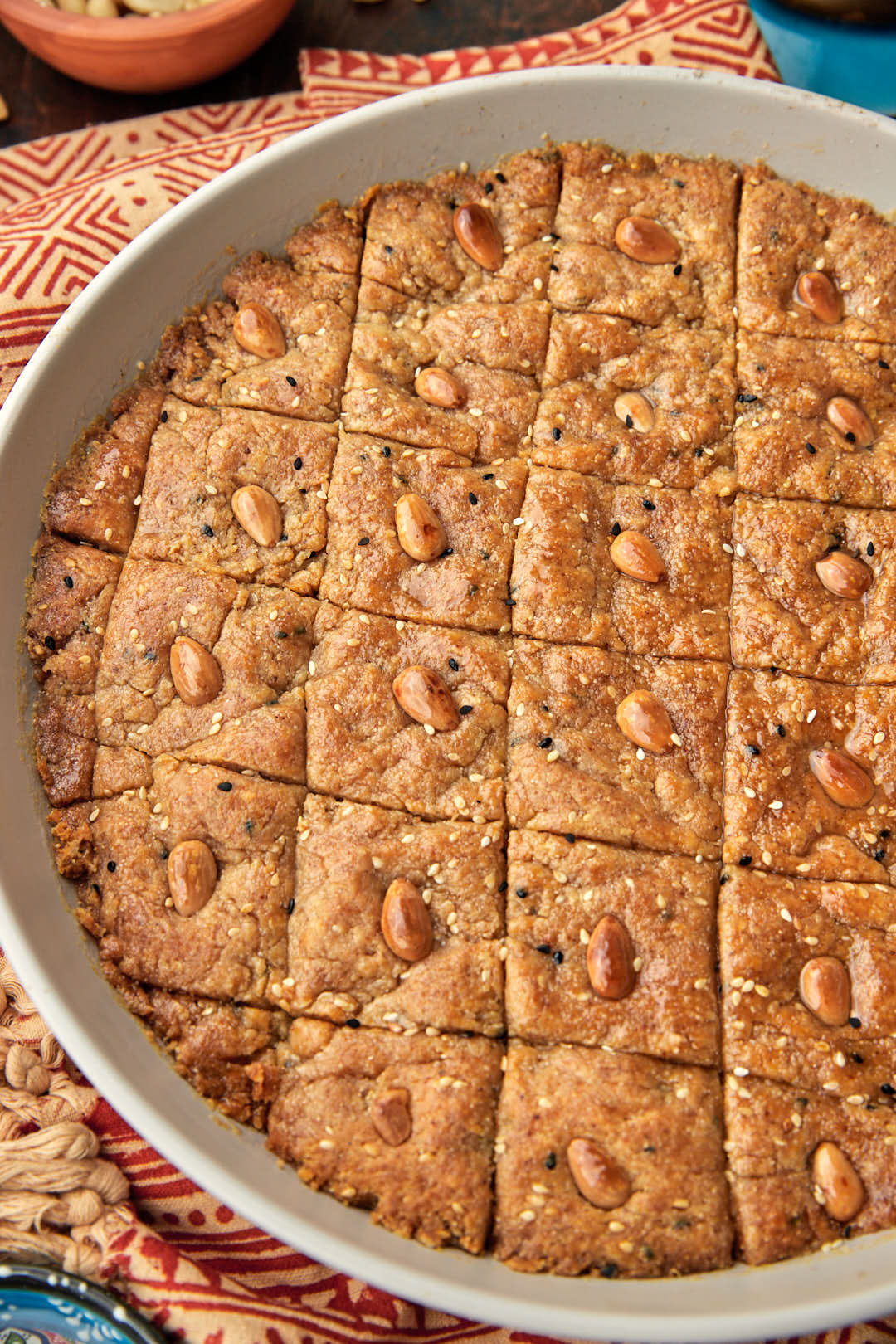
- Hilbeh is traditionally cut into diamond-shaped slices. You can cut this into regular bars if you prefer.
- If you want this even sweeter, you can serve with extra sugar syrup (you won’t need it though!)
Recipe variations:
- Nut-free: Skip the almond on top.
- Less sweet: Use ¾ of the syrup and let it absorb slowly.
- Less intensely fenugreek flavored: leave out the fenugreek powder
Storing Leftovers:
Hilbeh keeps well:
- At room temperature: up to 1 week
- In the fridge: Up to 10 days
- Frozen: Up to 3 months (freeze in slices)
See the recipe for a similar semolina bar, without the fenugreek called namoura here.
Expert tips and tricks:
- Use fine semolina, not coarse, otherwise you’ll have a grainy texture.
- Keep a close eye while toasting — semolina burns quickly.
- Cut all the way to the bottom of the pan into diamond shapes before baking for clean edges.
- Don’t overbake; the syrup needs something soft to soak into, but also don’t underbake! I like to check the base of the pan to make sure the bottom of the bars has turned a light golden brown so that they have some structure.
Top Tip
Prepare the syrup either while the hilbeh is resting, in the oven, or even days in advance so it has a chance to cool before you pour it onto the hot hilbeh.
Recipe FAQs:
Hilbeh literally translates to fenugreek, and hilbeh cake is a traditional Palestinian dessert using steeped fenugreek seeds to make a delicious sticky semolina bar/cake. Hilbeh has a warm, earthy, lightly bitter (in a pleasant way), nutty, and sweet flavor.
You can use only fenugreek powder, but the flavor won’t be as deep or aromatic. Otherwise, try these semolina desserts for something similar made without fenugreek: basbousa, namoura.
It will be light golden brown, and if you lift a little from the base of the pan, the bottoms will also be set and golden brown.
This rest period allows the semolina to properly absorb the liquid, giving a melt in the mouth texture instead of distinct gritty grains.
If you liked this recipe, you might like:
Looking for other recipes like this? Try these:


Pairing
These are my favorite dishes to serve with hilbeh:

Love this recipe? Please leave a 5-star 🌟🌟🌟🌟🌟rating in the recipe card and a comment!
Stay in touch with me through social media @ Instagram, Pinterest, and Facebook. Don’t forget to tag me when you try one of my recipes!

Hilbeh
Ingredients
For the dough:
- 1 cup water 240ml
- 2 tablespoon fenugreek seeds
- 1 cup fine semolina 175g
- 1 teaspoon instant yeast
- pinch sugar
- 3 cups all purpose flour 375g
- 2 tablespoon toasted sesame seeds
- 2 tablespoon nigella seeds (black sesame seeds)
- 1 tablespoon fenugreek powder (optional for extra flavor)
- 1 teaspoon baking powder
- 1/3 cup melted butter 75g
- 1/2 cup olive oil 100g
For the sugar syrup:
- 2 1/2 cups white sugar 500g
- 1 1/4 cup water 300ml
- squeeze lemon juice
- 1 1/2 tablespoon rose water
- 1 1/2 tablespoon orange blossom water
For assembling:
- 2 tablespoon tahini, or melted butter or ghee for greasing the pan
- 1/2 cup blanched whole almonds (skin removed, raw)
Instructions
- In a small saucepan, add the water and bring to a boil. Add the fenugreek seeds and remove from the heat, cover and let it steep at least 10 minutes.
- In a large dry skillet on medium heat, add the semolina. Toast, until light golden brown and fragrant, stirring constantly (a good 8-10 minutes, maybe even more)
- In a small bowl, strain the fenugreek water, discarding the seeds. To the water, add the instant yeast and sugar. Mix, then let sit for a few minutes until bubbly.
- To a large bowl, add the toasted semolina, flour, sesame and nigella seeds, fenugreek powder if using and baking powder. Whisk to combine.
- Add the melted butter and olive oil, and the yeast/water mixture. Mix with a spatula to combine, then use hands to really work the dough together. Dough will be on the drier side.
- Grease a 12 inch circular pan or pan of your choice with tahini. Press the dough into the prepared pan until even.
- Using a knife, cut diamond shapes into the bars, cutting all the way through to the bottom of the pan. Top each diamond with a whole almond, pressing down slightly to get them to stick.
- Cover the pan with a kitchen towel, and rest for one hour. Near the end of the one hour, preheat the oven to 375 F (190C). Meanwhile, make the sugar syrup.
Make the sugar syrup:
- In a medium saucepan, stir together the sugar, water and lemon juice. Set on a stovetop over medium high heat. Bring to a boil, then reduce heat to low and let it simmer for 10 minutes. Remove from the stove immediately once 10 minutes is over, and off the heat stir in the rose water and orange blossom water. Set aside to cool.
Finish off the hilbeh:
- After the one hour rest, bake the hilbeh in the middle of the oven, until light brown on top, about 35 minutes. Lift one of the diamonds to make sure the bottom is also cooked. Optionally, broil for another couple fo minutes to get some color on top.
- Once it's out of the oven, immediately pour the syrup all over the hot hilbeh and let it stand for at least 30 minutes to soak in the syrup.
Video
Notes
• Fenugreek seeds are the heart of this recipe. Steeping them in hot water extracts their warm, earthy flavor without the harsher bitterness they can sometimes have.
• Fine semolina is essential. Coarse semolina will make the texture grainy rather than soft and fudgy.
• Sesame and nigella seeds add warmth and aroma. You can swap the nigella for black sesame if needed.
• Fenugreek powder is optional but great if you want a stronger, more pronounced fenugreek flavor.
• Melted butter and olive oil together give the cake richness while keeping the texture moist. You can substitute ghee for the butter for a more traditional flavor.
• For the syrup, the rose water and orange blossom water give that classic Middle Eastern floral aroma. Add them off the heat so the flavor stays bright and fragrant. Important Recipe Tips:
- Keep stirring the semolina while it toasts so it doesn’t burn
- The dough will feel slightly dry, but this is normal. After resting, the semolina absorbs the liquid and softens.
- Always score the dough into diamonds before baking. Cutting all the way down to the bottom ensures clean slices after baking.
• Resting the dough for one hour is crucial for giving the bars their signature soft, melt-in-your-mouth texture.
• Bake until the top is lightly golden and the bottom of one piece also looks set and golden. This prevents sogginess after adding the syrup.
• The syrup should be cool when poured over the hot cake so it absorbs quickly and evenly.
• Allow the hilbeh to sit at least 30 minutes after adding the syrup so it has time to fully soak through.
• At room temperature: Store tightly covered for up to 1 week.
• In the fridge: Lasts up to 10 days. Keep it in an airtight container to prevent it from drying out.
• Freezing: Freeze individual slices for up to 3 months. Thaw at room temperature, then warm briefly if you prefer it soft.
Leave a Reply