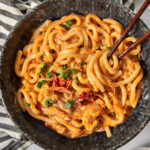
Kimchi Udon Noodles
The most delicious creamy kimchi noodles, thick and delicious udon noodles in an addictive sauce- comes together in 10 minutes!
Servings 2 people
Calories 353kcal
Ingredients
- 2 tablespoon olive oil
- 2 garlic cloves, crushed or minced
- 2 green onions, sliced (white and green parts)
- 1/2 cup kimchi, chopped
- 1 tablespoon gochujang or sriracha sauce
- 1 tablespoon soy sauce
- 1/2 teaspoon granulated sugar
- 1/3 cup heavy cream (whipping cream) 80 ml
- 1/2 cup shredded mozzarella cheese, optional
- 2 packs frozen udon noodles total of 400-500g
Instructions
- Add the olive oil to a deep skillet set on medium high heat, then once hot add in the minced garlic. Saute for a minute until fragrant.
- Add the sliced green onion (reserving a little for garnish( and kimchi, and stir and cook for a minute or two.
- Mix together the gochujang or sriracha, soy sauce, and sugar, then add this paste to the skillet. Stir for 30 seconds.
- Reduce heat to low, add the cream, and simmer for a minute.
- In a separate large bowl, pour boiling water over the frozen udon noodles, letting them sit for 30 seconds until they soften all over. Use tongs to drop them into the skillet sauce mixture. Stir to coat and warm through.
- Stir in the shredded mozzarella cheese until melted.
- Enjoy immediately, garnished with extra chopped kimchi and sliced green onions.
Video
Notes
Ingredient Notes:
- Gochujang: Adds authentic spicy, savory flavor. Sriracha works well as a substitute if that’s what you have on hand.
- Heavy cream: Makes the sauce rich and silky. You can substitute half and half for a lighter version, though the sauce will be thinner.
- Mozzarella cheese: Optional, but adds a delicious creamy and stretchy texture to the noodles.
- Udon noodles: Frozen vacuum-packed udon noodles have the best chewy texture for this recipe. Shelf stable noodles can work in a pinch.
- Only soak the frozen noodles briefly in boiling water to loosen them before adding directly to the sauce.
- Keep the heat low once the cream is added to prevent the sauce from splitting.
- Taste the sauce before serving since different kimchi brands vary in spice and saltiness.
- If the sauce thickens too much, loosen it with a splash of water, milk, or cream.
- Store leftovers in an airtight container in the refrigerator for up to 3 days.
- The noodles will absorb some of the sauce as they sit, so add a splash of cream, milk, or water when reheating to loosen everything back up.
- Reheat gently in a skillet over low heat or in the microwave in short intervals, stirring between each interval for even heating.
- These noodles are best enjoyed fresh, but leftovers are still delicious the next day.
Nutrition
Calories: 353kcal | Carbohydrates: 30g | Protein: 12g | Fat: 21g | Saturated Fat: 6g | Polyunsaturated Fat: 2g | Monounsaturated Fat: 12g | Cholesterol: 22mg | Sodium: 874mg | Potassium: 161mg | Fiber: 2g | Sugar: 2g | Vitamin A: 336IU | Vitamin C: 7mg | Calcium: 391mg | Iron: 11mg